
From Aging Residence Hall to Admissions Advantage: 9 Essential Steps to Revitalize Your Housing Stock
When I look at an aging residence hall, I see a huge opportunity for college campuses. Your student housing is the most tangible representation of your campus culture, and chances are, its current performance is damaging your reputation and impacting your bottom line through high energy bills, chronic student complaints, and recruitment tours that fall short.
The solution to your aging infrastructure is a single, cohesive strategy: a refresh that focuses on student comfort, visual appeal, and the move toward a carbon-free future. It’s about making spaces that are desirable and highly efficient.
Here are the 9 Steps we created to help guide your residence hall transformations, turning your biggest liability into your newest, most compelling campus asset.
Phase 1: The Strategic Foundation (Vision & Value)
1. Define the Ideal Student Living Vision: This is the most crucial step in your journey: defining the desired emotional and functional student experience. What is the new aesthetic character we are creating or the historic character we are reviving? This step establishes the entire design narrative, from the lobby’s flow to individual comfort controls in each room to ensuring every technical upgrade elevates the living environment and, ultimately, strengthens your admissions pitch.
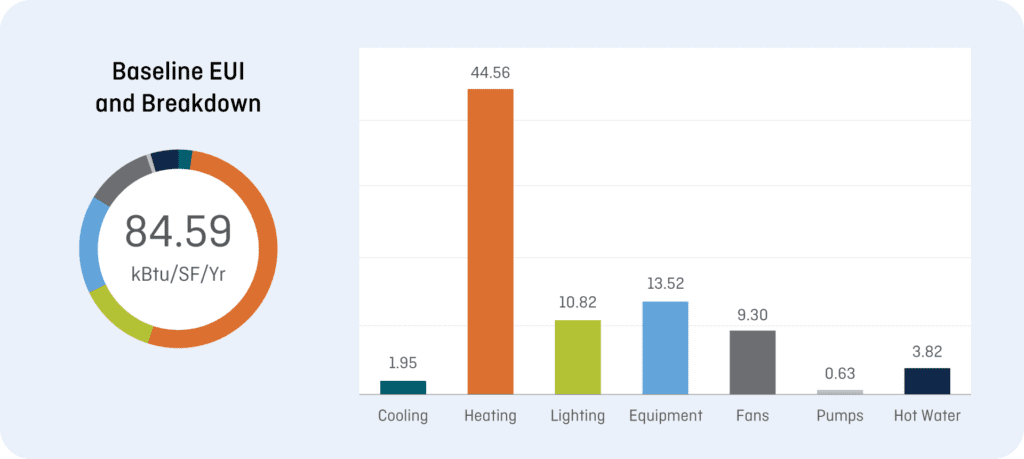
2. Baseline the Building’s Performance and Potential: Before a design concept is developed, we must quantify the building’s current state. This is where our integrated team of architects, engineers, and commissioning specialists provides data-driven validation to inform design direction. Leveraging utility data and facility assessments to calculate the building’s Energy Use Intensity (EUI) our team is able to pinpoint areas of excessive energy loss, whether through the envelope or mechanical systems, providing a clear foundation for targeted improvements that maximize efficiency and occupant comfort.
3. Develop the Financial Roadmap Through Phased Design: A deep retrofit is a significant investment. We collaborate with you to align design scope with your capital planning and break the work into logical phases. By demonstrating the Return on Investment (ROI) of early efficiency measures, we create a funding model where operational savings are strategically reinvested to fund the next architectural or mechanical phase, minimizing overall financial strain.
Phase 2: The Core Transformation (The Integrated Design)
4. Harness the Invisible Architecture of Control: The fastest performance improvement is realized through intuitive, modern controls. We implement modern Building Management Systems (BMS) compatible with existing systems to seamlessly optimize lighting, ventilation, and temperature setpoints across the building. This is the invisible architecture of efficiency, ensuring the existing infrastructure performs to its optimal potential before any major envelope work begins.
5. Reduce Heating and Cooling Loads with Envelope Upgrades: This is the critical architectural intervention: designing a high-performance envelope. Leaky walls, roofs, and windows are often the hidden culprit behind occupant comfort complaints, issues frequently blamed on mechanical systems but rooted in poor envelope performance. Whether addressing these weaknesses involves a surgical preservation of historic facades coupled with high-performance windows, or adding insulation and air barriers, our design ensures a dramatic reduction in the building’s heating and cooling load. Envelope improvements not only cut energy use and lower mechanical system size and cost, but they also create healthier, more comfortable living environments, reducing drafts, temperature swings, and moisture issues that impact resident well-being. A tight, efficient building envelope paves the way for modern, efficient HVAC systems, and facilitates a reduction in the on-site burning of fossil fuels.
6. Improve Distribution and Reduce Carbon Footprint: Our mechanical designs transition your buildings away from high temperature, leaky steam systems, and into modern, low temperature, hydronic heating solutions. This shift not only enables the use of advanced heat pump technology, dramatically reducing carbon emissions, but also provides flexibility for the future. We design systems that integrate seamlessly with existing central plants today, while ensuring they can operate independently tomorrow, supporting a phased transition away from fossil-fuel infrastructure without replacing newly installed local equipment.
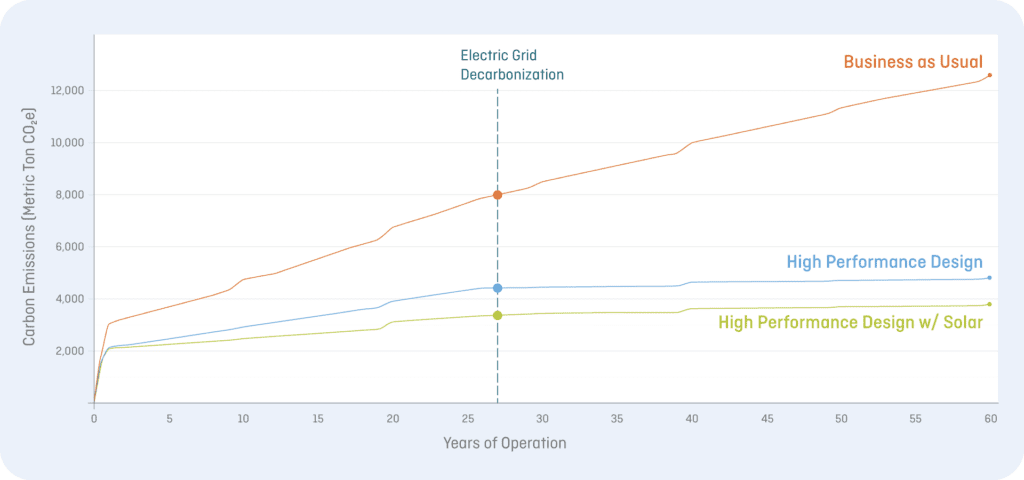
7. Electrify the Mechanical Plant: Our engineers reduce the reliance on fossil-fuel machinery with efficient electric solutions, primarily air-source or geothermal heat pumps. By focusing on electrification, we are designing a building that is ready to harness energy from an increasingly sustainable electric grid. To further optimize performance and manage utility costs, we integrate targeted photovoltaic (PV) and battery storage solutions, supporting beneficial electrification of central plants and providing resilience against peak demand charges.
Phase 3: The End-User Experience (The Recruitment Tool)
8. Deliver Personalized Comfort Through Individual Room Control: This is the heart of our resident-centric design. We eliminate frustrating, centralized systems by designing zoned mechanical systems that provide students with direct, intuitive control over the temperature in their own rooms. Personalized controls is the number one requested feature from students and gives your Admissions team a powerful, tangible selling point: autonomy over one’s own space.
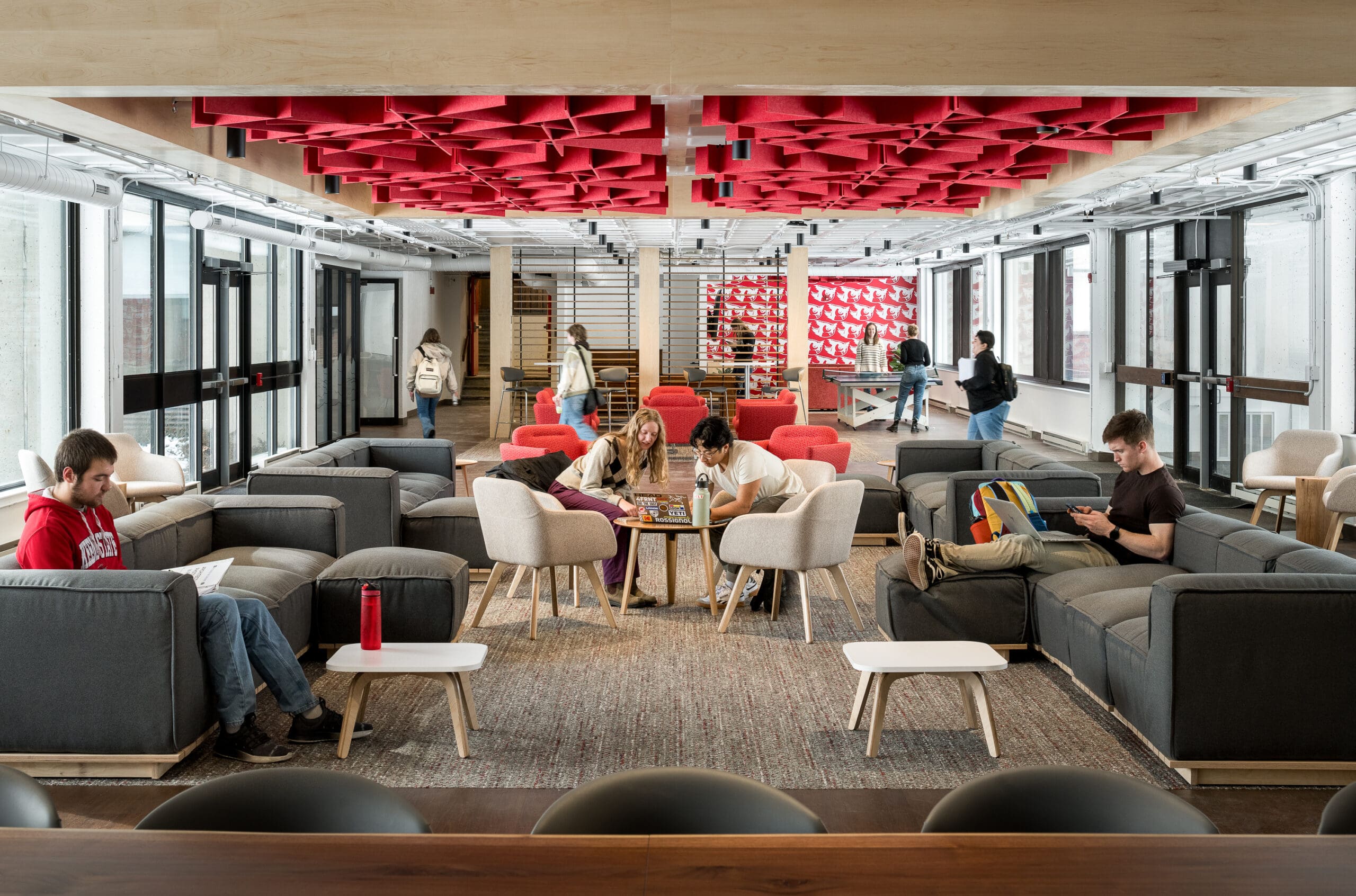
9. Showcase the Story: Sustainability as a Signature Amenity: The completed project is a statement, a visible testament to institutional values. Use the newly designed, comfortable common areas, like the successful retrofits at Keene State College Carle Hall’s public spaces, as the centerpiece of your admissions materials. We help you tell the full story: a building that is beautiful and comfortable, yet also directly reflects your institution’s commitment to a carbon-neutral, ethical future. Your energy reduction becomes a powerful amenity and a unique recruitment edge.
Ultimately, transforming your aging residence halls is not a question of spending, but of strategic design. The merging of architectural vision, solid engineering, and clear decarbonization targets yields a powerful, sustainable asset. The steps we’ve outlined turn deferred maintenance into financial leverage and an admissions advantage. Consider transforming your oldest structures into the most honest, compelling statement of your institutional values.