Precision & Acceleration: 7 Key Design and Construction Trends Shaping Radiopharma Facilities in 2026

By Andrew Tyner, Senior Principal, Director of Life Sciences & Nutrition Practice, and Christopher McAllister, Project Management Leader of the Life Sciences & Nutrition and Advanced Manufacturing Practices
The Urgency of Targeted Medicine
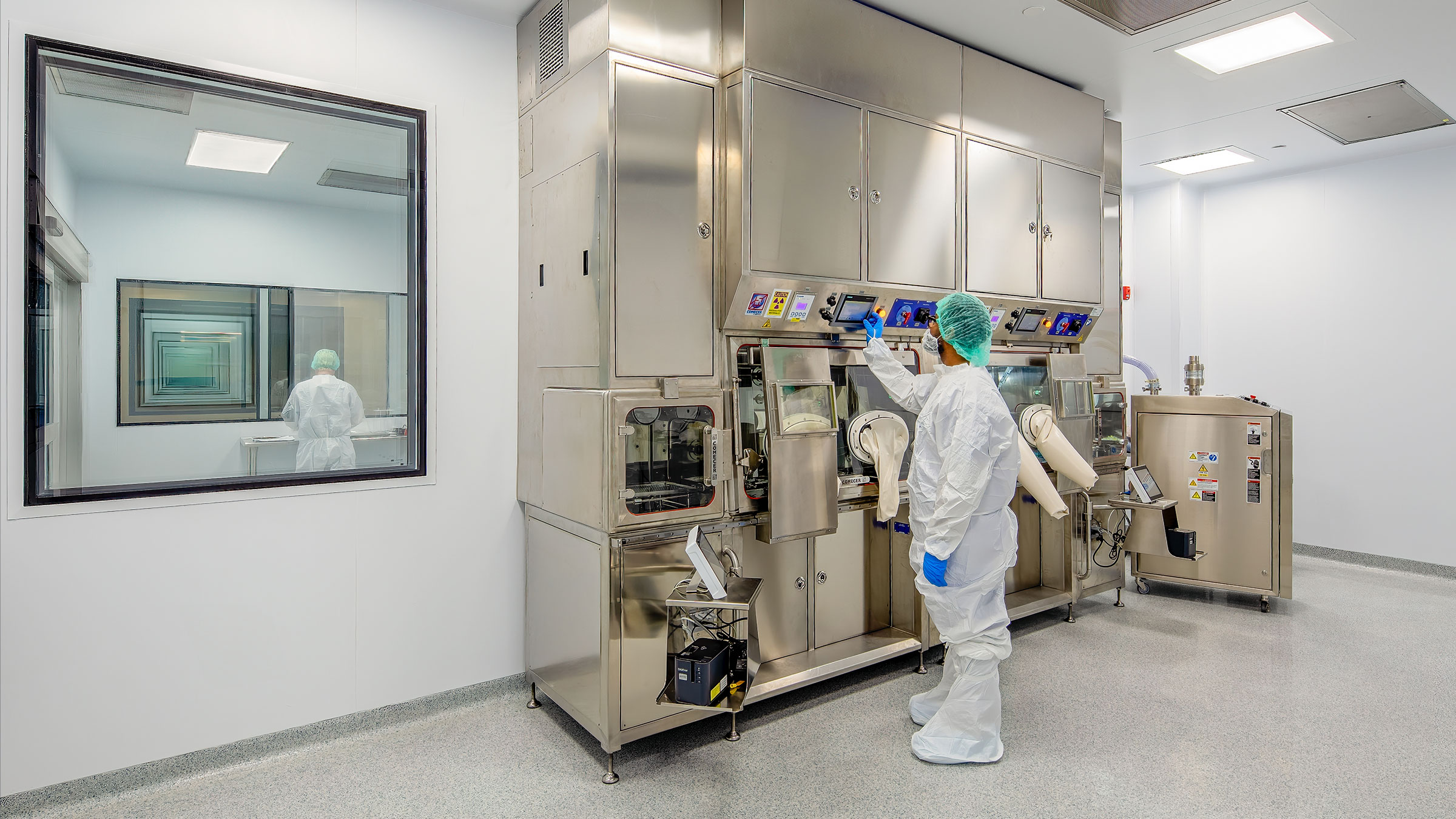
The radiopharmaceutical sector is experiencing a period of explosive growth, driven by the shift towards highly targeted theranostics, agents that both diagnose and treat diseases like cancer with unprecedented precision. For architects and builders in 2026, this dynamic landscape presents a unique mandate: design facilities that can keep pace with science that requires administration within days of production to maintain its effectiveness, not a traditional “shelf-life”.
The traditional facility model serves as a baseline, but the unique decay profiles of short-half-life isotopes necessitate specialized layouts that prioritize rapid processing and immediate distribution. Our role, as designers who bridge the gap between groundbreaking science and the built environment, is to ensure the infrastructure is as innovative as the medicine itself.
Here are the seven critical design trends defining the next generation of radiopharma facilities.
1. Embracing Modularity for Accelerated Delivery
In radiopharma, time is a critical operational factor. The short shelf-life of products makes speed to market the ultimate design driver. We are seeing a powerful shift towards modular construction and off-site prefabrication to achieve this speed.
- Key Action: Off-site fabrication of critical zones (cleanrooms, hot cell zones, and support infrastructure) significantly reduces on-site build times and minimizes risk. This focus on prefabricated modules accelerates the facility’s ability to achieve Speed to First Dose and aligns with broader pharmaceutical facility design trends.
2. Designing for the Unknown: Agility & Future-Proofing
Facilities must be designed to handle the products of today and the pipeline of tomorrow. This requires architectural agility, and the ability to expand or reconfigure without massive overhauls.
- Key Action: Designers must create pivotable manufacturing zones that can adapt quickly to different processes, cleanroom grades, or production scales. This includes planning for future modalities now, building capacity to handle not just current isotopes but next-generation agents. This preemptive design is essential for maintaining long-term regulatory compliance.
3. Strategic Integration of Isotope Production
The logistical risk associated with transporting short-half-life isotopes is driving a crucial trend: the co-location of manufacturing and supply.
- Key Action: There is increasing motivation for vertical integration where isotope production (cyclotrons and other developing technologies) is physically connected or closely co-located with the CDMO/manufacturing facility. These integrated sites secure a rapid, tightly controlled flow of isotopes, drastically improving turnaround times and reducing overall supply chain risk.
4. Leveraging Digital Twins and Pharma 4.0
The complexity of handling radioactive materials and high-grade cleanrooms demands advanced digital tools to ensure precision and efficiency from design through operation.
- Key Action: The use of Digital Twins for facility planning, layout optimization, and simulating future expansion scenarios is becoming standard practice. Furthermore, Virtual Reality (VR) and 3D modeling are crucial tools in the early stages to detect structural/mechanical clashes and secure critical stakeholder buy-in by visualizing workflow and safety protocols.
5. Optimizing Flow for Minimal Delay
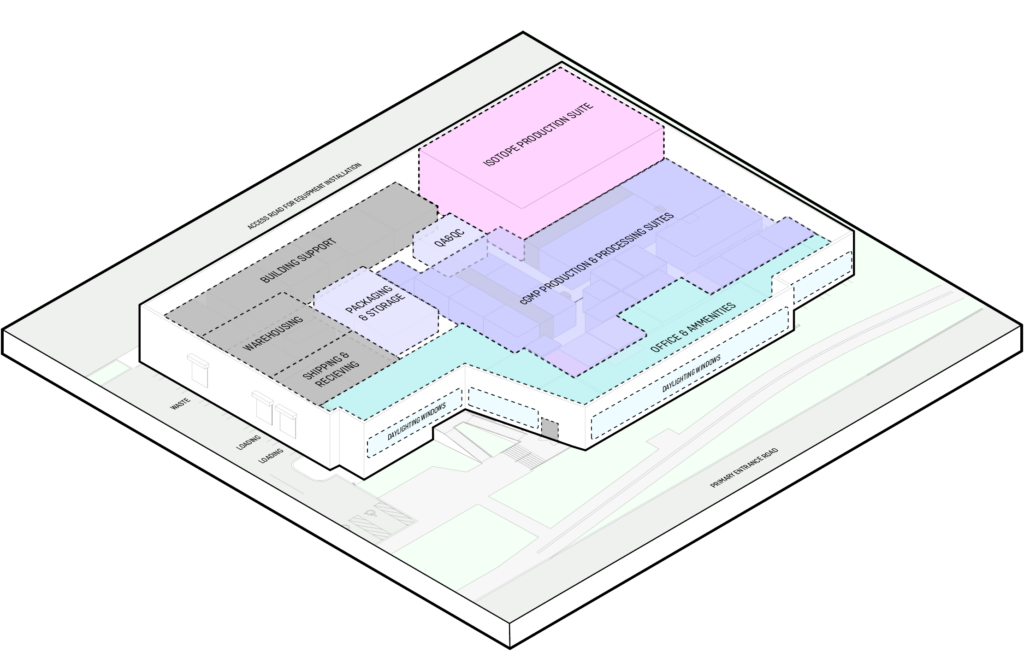
Given the short half-lives of therapeutic radionuclides, every second counts. Facility layouts must be surgical in their efficiency, directly contributing to patient access.
- Key Action: Layouts are strictly optimized for minimal delay, streamlining the entire journey: Production to Quality Control to Dispensing to Transport. This focus requires efficient process flow and careful consideration of logistics, including close proximity to clinical centers and transportation hubs, to minimize production-to-patient time.
6. Advanced Planning for Radioactive Waste Streams
Managing radioactive waste is a unique and critical design component that must be addressed with foresight and flexibility to comply with regulatory requirements.
- Key Action: Comprehensive planning for radioactive waste streams and storage is now a major early-stage design focus. Design must plan for flexibility based on isotope half-life, ensuring adequate decay-in-storage capacity and compliant disposal routes for both liquid and solid waste.
7. Automation and Safety-First Workforce Design
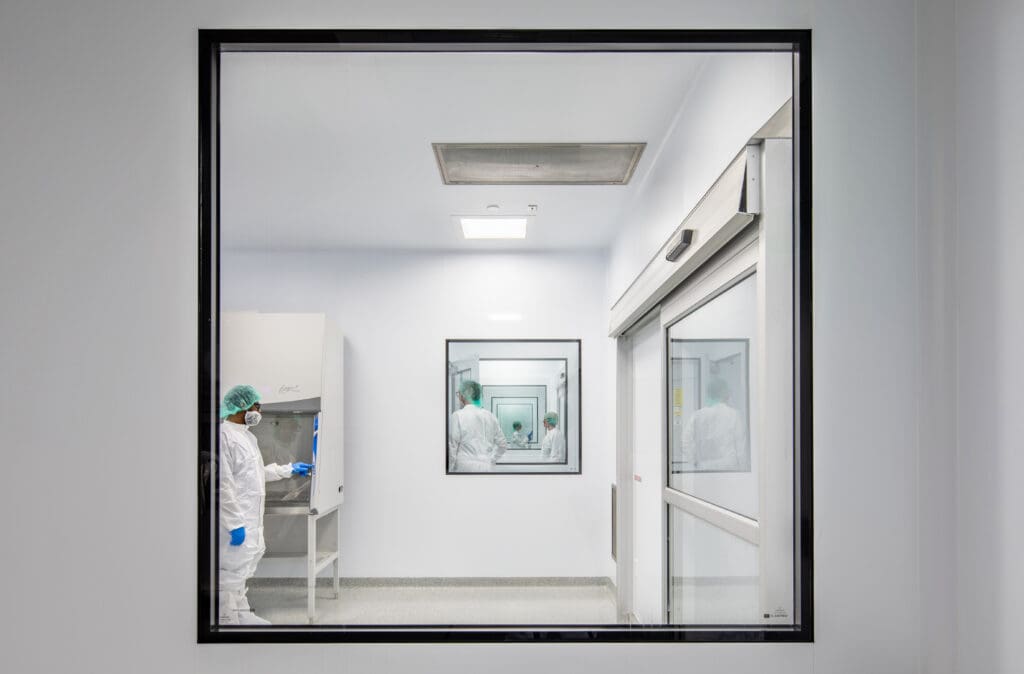
The safety of the personnel handling radiation is paramount, driving design choices that minimize manual operations and maximize remote control.
- Key Action: Manual handling of materials is being replaced or minimized through automation, including the use of specialized telemanipulators/tongs in hot cells and robotic systems. Design must prioritize safety, visibility, access, and ease of maintenance, incorporating optimized shielding, dedicated service corridors, redundant systems, and remote handling capabilities to protect the workforce while maintaining operational continuity.
Designing for a Healthier Future
The radiopharma market is poised to exceed $7.87 billion in 2026, underscoring the vital need for strong, resilient, and intelligent infrastructure. These buildings are critical links in the patient treatment chain.
The future of medicine demands architecture of precision, and we are ready to design it.