Reduce, Reuse, & Create Impact: Extending Resources Where They Matter Most
How This Started
Four years ago, I met Mike at school pickup. Our kids were in the same class, and over time, we became friends. Mike is a nurse practitioner, the kind of person who sees a need and figures out how to help.
He told me about his connection to Liberia through his closest friend from nursing school, someone who became like a brother to him. That friend had fled Liberia as a teenager during the civil war. After completing his education and serving in the Navy, he returned home once the country stabilized. What he does there is straightforward: he supports an entire neighborhood of children by paying for their education. His sister funds an entire school’s operations.
Mike wanted to contribute in a different way. When he asked his friend how he could help, the suggestion was phones. But Mike had always been into technology, and he saw another possibility. Computers could provide lasting access to digital literacy and broader opportunities.
That’s when Mike asked me if I knew where he could find laptops.

The Response
I brought Mike’s story to our IT department and our leadership team. SMRT invests in philanthropic and sponsorship opportunities that advance our mission and reflect our core values; we prioritize opportunities that support our communities and meaningfully contribute to making the world a better place.
I explained Mike’s work, the need in Liberia, and what we could contribute with decommissioned equipment.
The response was unanimously clear: yes.
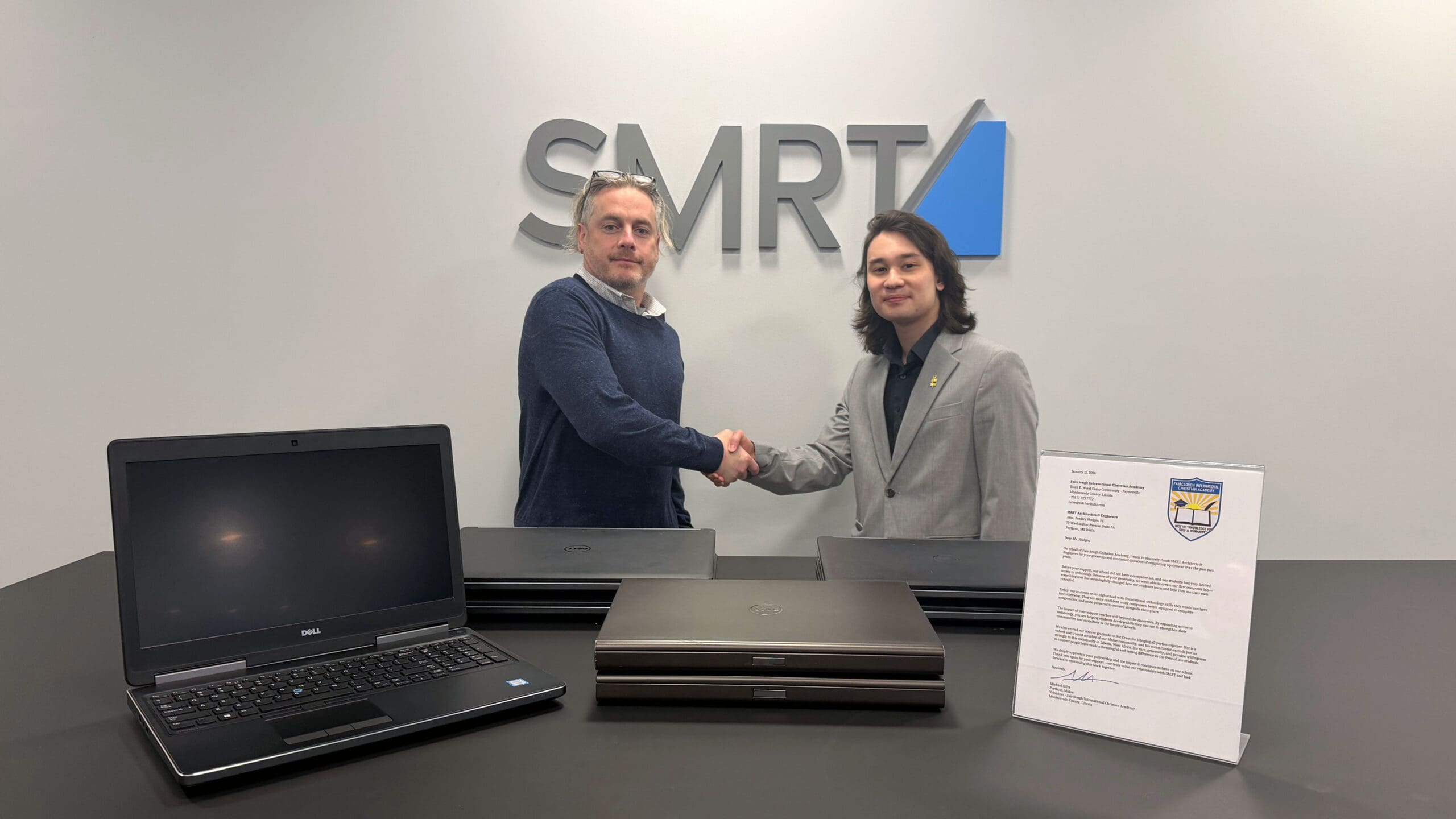
Our late Director of IT, Steve Landry and IT Specialist Will Thornton, had retired laptops that still had years of useful life ahead of them. If Mike could transport them, we’d provide the equipment.
This matters more than it might seem. Almost all “old” electronics end up in landfills. Even though e-waste represents only 2% of municipal solid waste, discarded computers and phones account for roughly 70% of the toxic heavy metals, lead, mercury, and cadmium found in U.S. landfills. Extending the life of functional equipment isn’t just good sense; it’s essential environmental practice.
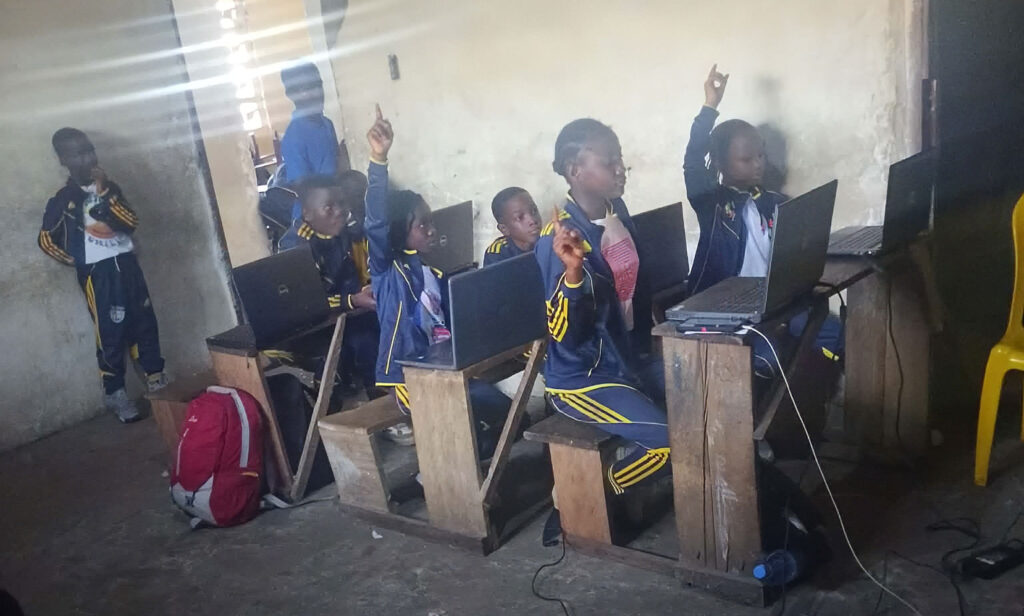
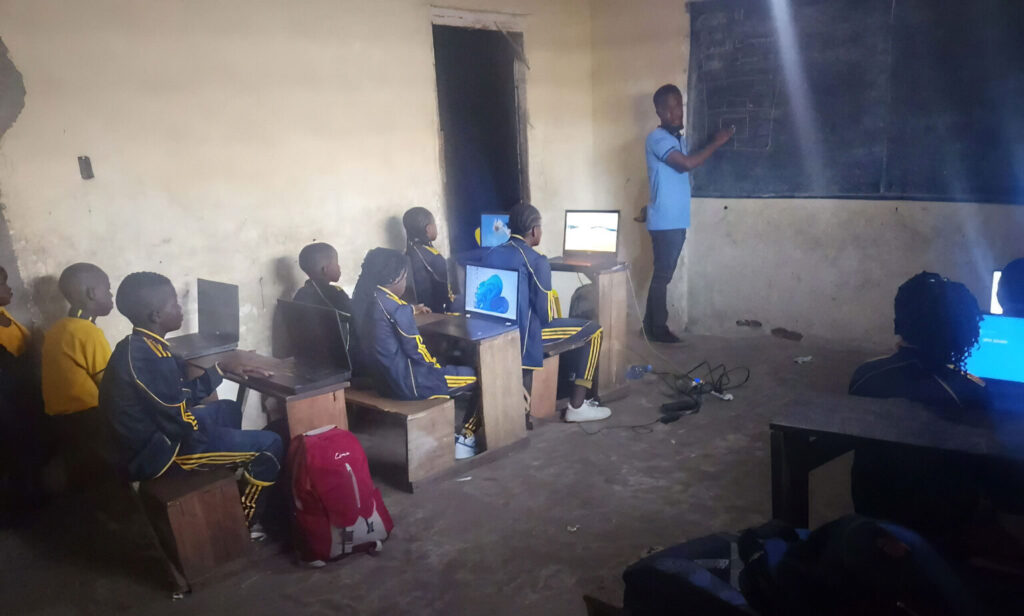
Mike transported the first six laptops himself two years ago: reformatted them, set them up, and created a computer lab where students used a computer for the first time. Watching a video of 6th, 7th and 8th graders experiencing a touchpad for the first time really struck a chord. This year, he identified another rural community that needed resources to connect these bright kids to the larger world. SMRT contributed seven more.
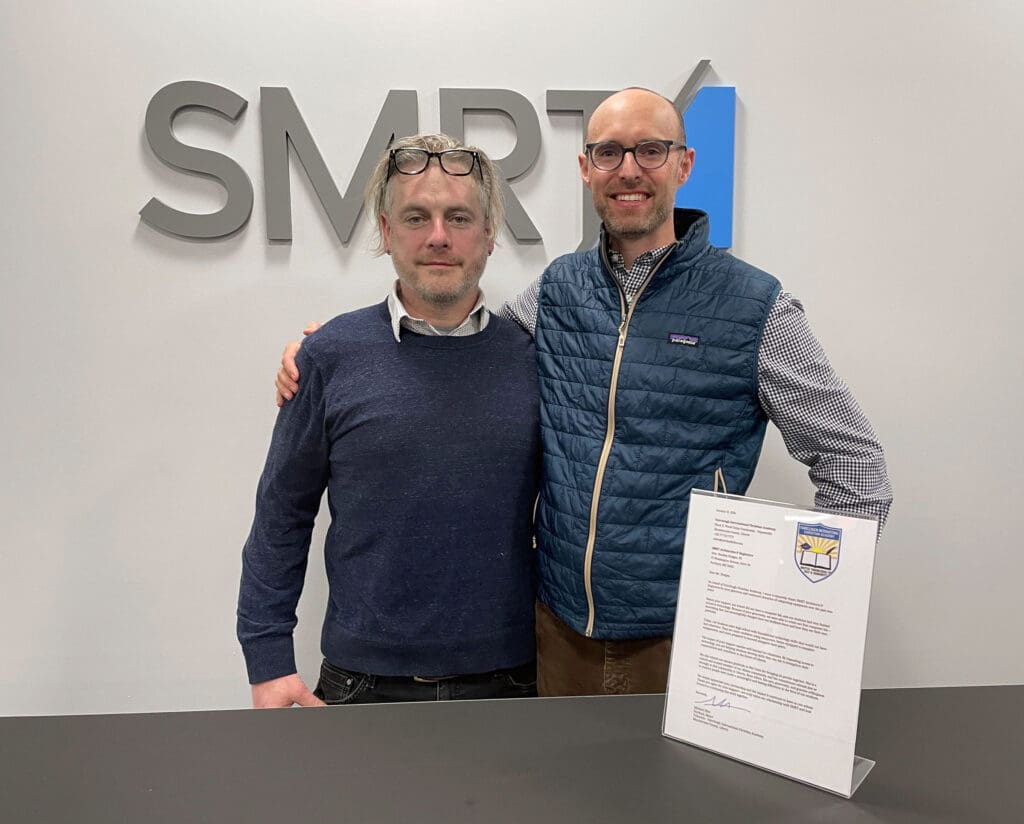
Mike is now formalizing this work through Liberia Learning Labs, a 501(c)(3) that will create school partnerships and coordinate with local organizations to ensure sustainable impact.
Why This Matters to Me
I’ve spent my career designing spaces that support people’s growth. Student housing that helps institutions meet enrollment goals. Community centers that serve neighborhoods for generations. Buildings that create the conditions for people to thrive.
But what Mike’s request represented was different. It was direct: someone identified a need, I presented it to our leadership, and SMRT said yes.
SMRT talks about empowering people as a core value. We design with purpose. We grow through innovation. We empower our people. Those aren’t just phrases when a place actually acts on them.
The Bigger Question
What if every IT department at every company said yes to requests like this?
The equipment exists. Companies replace functional computers on regular cycles. The need exists worldwide. The logistics are manageable; Mike handles transportation himself, removing batteries for carry-on and paying for checked baggage.
The gap isn’t capability. It’s attention and willingness.
SMRT’s thirteen laptops won’t transform an entire education system. But for the students in those communities, they create access that didn’t exist before. They enable skill development that opens doors and opportunities.
And for me, they demonstrate something equally important: I work at a place that puts its values into practice.
Moving Forward
This isn’t a one-time story. SMRT is committed to continuing this kind of practical support, whether that’s extending the life of technology through international partnerships or responding to needs our team members identify.
We empower our people by trusting them to recognize where we can make meaningful contributions. We design with purpose by understanding that impact extends beyond project boundaries.
Sometimes the most meaningful work is the most straightforward. You identify a need. You respond with what you have. You follow through.
That’s not charity. It’s just good sense. And I’m grateful to be part of a firm that operates this way.