Modeling the Difference: What Seven Years of AIA 2030 Data Tells Us
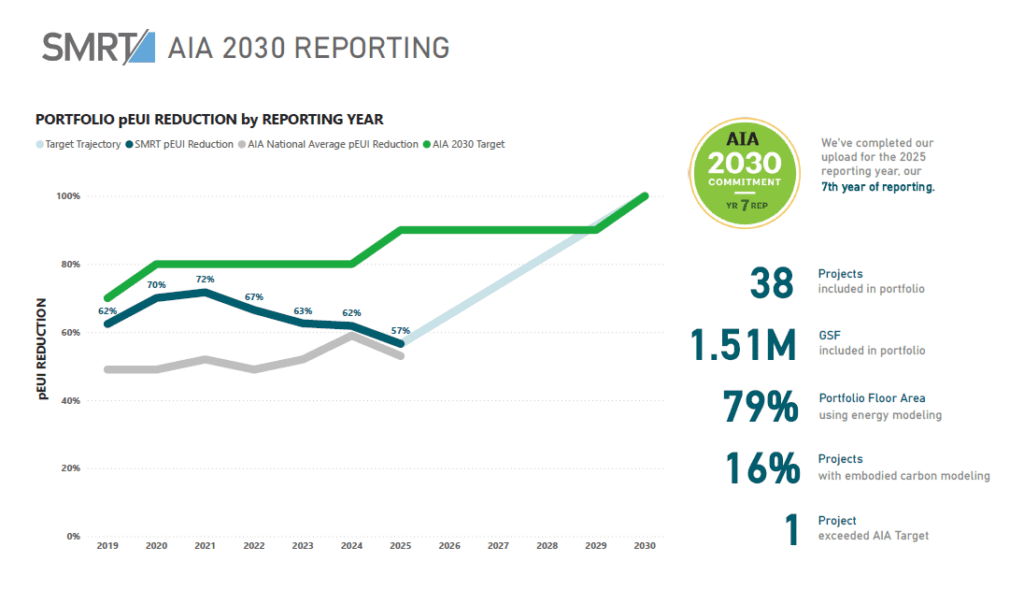
Consistency over time builds a different kind of picture. Seven submissions in, that picture is coming into focus. That shift is what this year’s submission reflects: seven years into SMRT’s AIA 2030 Commitment, the data is starting to tell a story.
Our 2025 reporting year portfolio is the largest and most robust we have submitted to date: 38 projects, 1.5 million gross square feet, and 30 whole-building project types, more than double the count from any year prior. Whole-building submissions require energy modeling where scope allows, which means this year’s data reflects a more complete and transparent picture of actual design performance.
Across that work, we achieved a 59% reduction in projected energy use intensity relative to the AIA 2030 baseline. That figure is slightly lower than our 2024 result, but the portfolio is broader and more complex than any we have previously submitted, spanning a wider range of project types and program intensities.
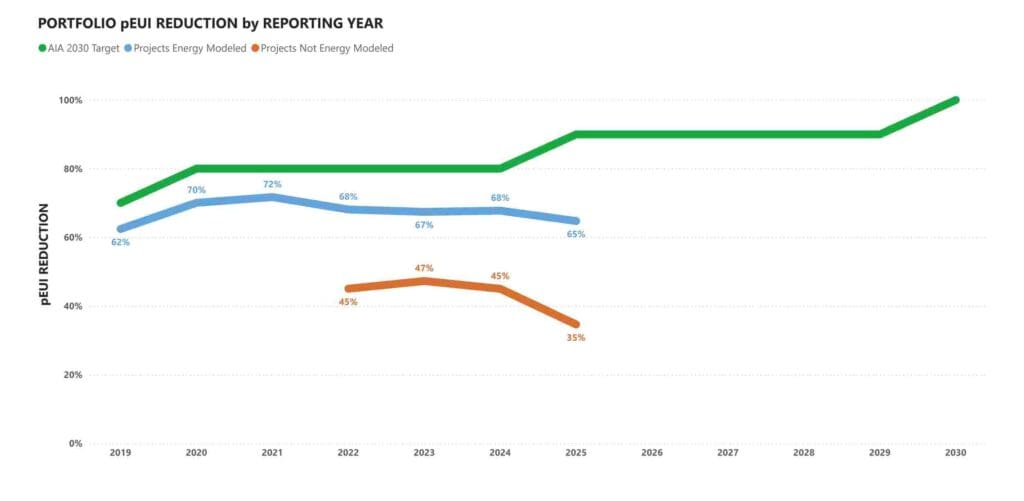
What stands out most in this year’s data is the performance gap between projects that used energy modeling during design and those that did not. Modeled projects consistently tracked closer to the AIA 2030 target, and in several cases exceeded it. The difference shows up clearly across project types and scales.
Of the total floor area represented by our whole-building submissions, 79% was energy modeled during design. That is the largest modeled square footage we have captured in a single reporting cycle. The coverage is not yet complete, but the volume and the performance gap both point in the same direction: modeling changes outcomes because it changes decisions. Earlier feedback on form, orientation, envelope, and systems gives teams the opportunity to act on that information before it becomes costly to do so.