
You Can’t Just Change the Furniture: What Workplace Leaders Need to Know About Assembly Space Code Requirements
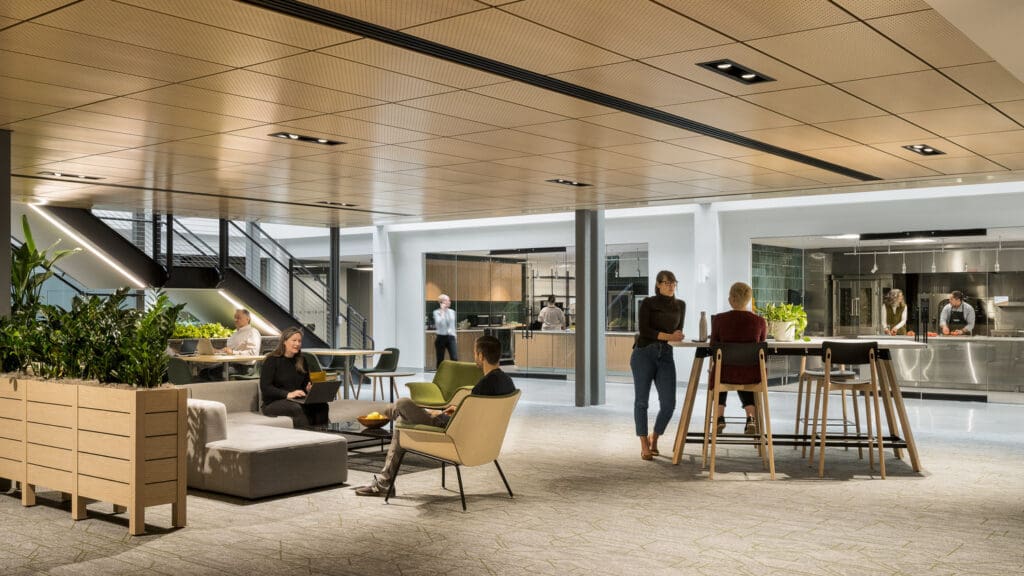
Organizations are becoming more intentional about the purpose of the office, recognizing that social capital built in person, not over video, fuels psychological safety and collaborative momentum. As AI becomes an increasingly prevalent part of workstreams, and human skills like empathy and creative problem-solving become more important, it is likely that this trend will continue. The traditional hierarchy-based office environments of…
The Wellbeing Dividend: Why Human-Centered Work is the Ultimate Competitive Advantage
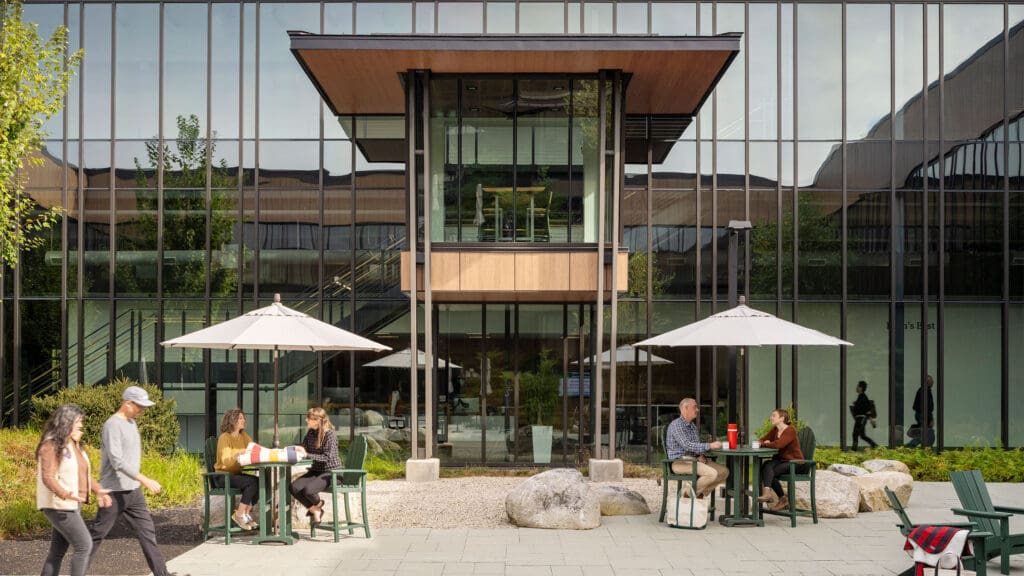
I’ve been with SMRT for nearly two decades. In those 19 years, I’ve had a front-row seat to a fundamental shift in how we define the workplace. In the past, offices were a backdrop, a static arrangement of furniture and floor plans, today, work environments are a high-performance tool for productivity, profitability, and people. Here…
Work Design Magazine Features Hannaford’s Home Office Renovation

The reimagining of the Home Office for Hannaford Supermarkets in Maine resulted in a connected, inclusive, and future-ready workplace for its 1,000 employees. Originally built in the 1970s as a Sears warehouse, the newly transformed hub is anchored by a multistory atrium with a monumental staircase, creating openness and encouraging collaboration and movement throughout the…
Return to Trust: The Human Side of Return-to-Office Decisions

Since the online algorithms know me and my obsession with all things workplace so well, I can’t log on to any device or app without being bombarded by articles about Return to Office policies (RTOs) – and naturally, I read all of them! RTOs are a careful calculation of risk vs. reward for executive leaders….