
You Can’t Just Change the Furniture: What Workplace Leaders Need to Know About Assembly Space Code Requirements
Organizations are becoming more intentional about the purpose of the office, recognizing that social capital built in person, not over video, fuels psychological safety and collaborative momentum.
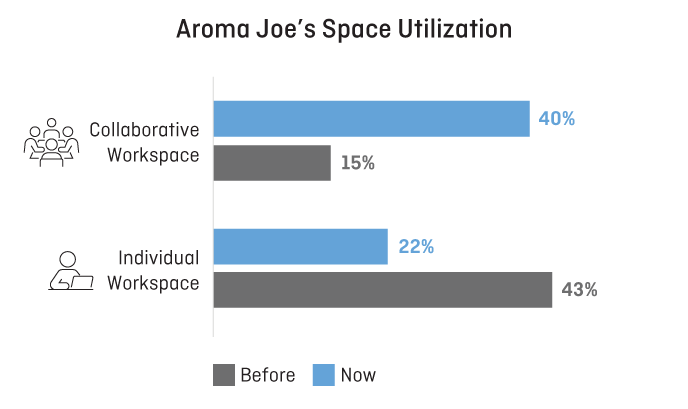
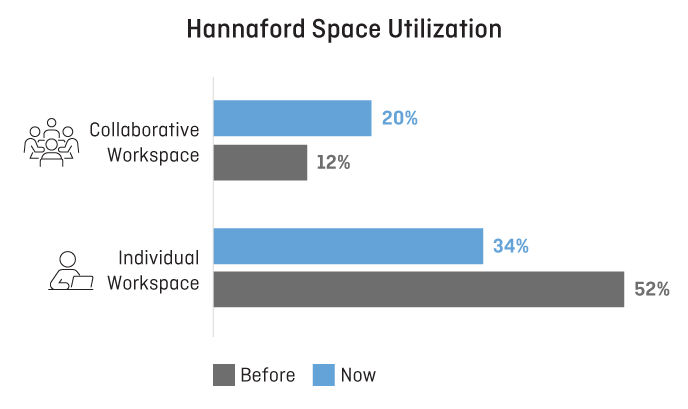
As AI becomes an increasingly prevalent part of workstreams, and human skills like empathy and creative problem-solving become more important, it is likely that this trend will continue. The traditional hierarchy-based office environments of the past were largely based on people performing individual tasks. Our recent work with Hannaford and Aroma Joe’s highlights the shift that we are seeing across the industry: a significant reallocation from individual assigned workspaces toward environments designed for connection and collaboration.
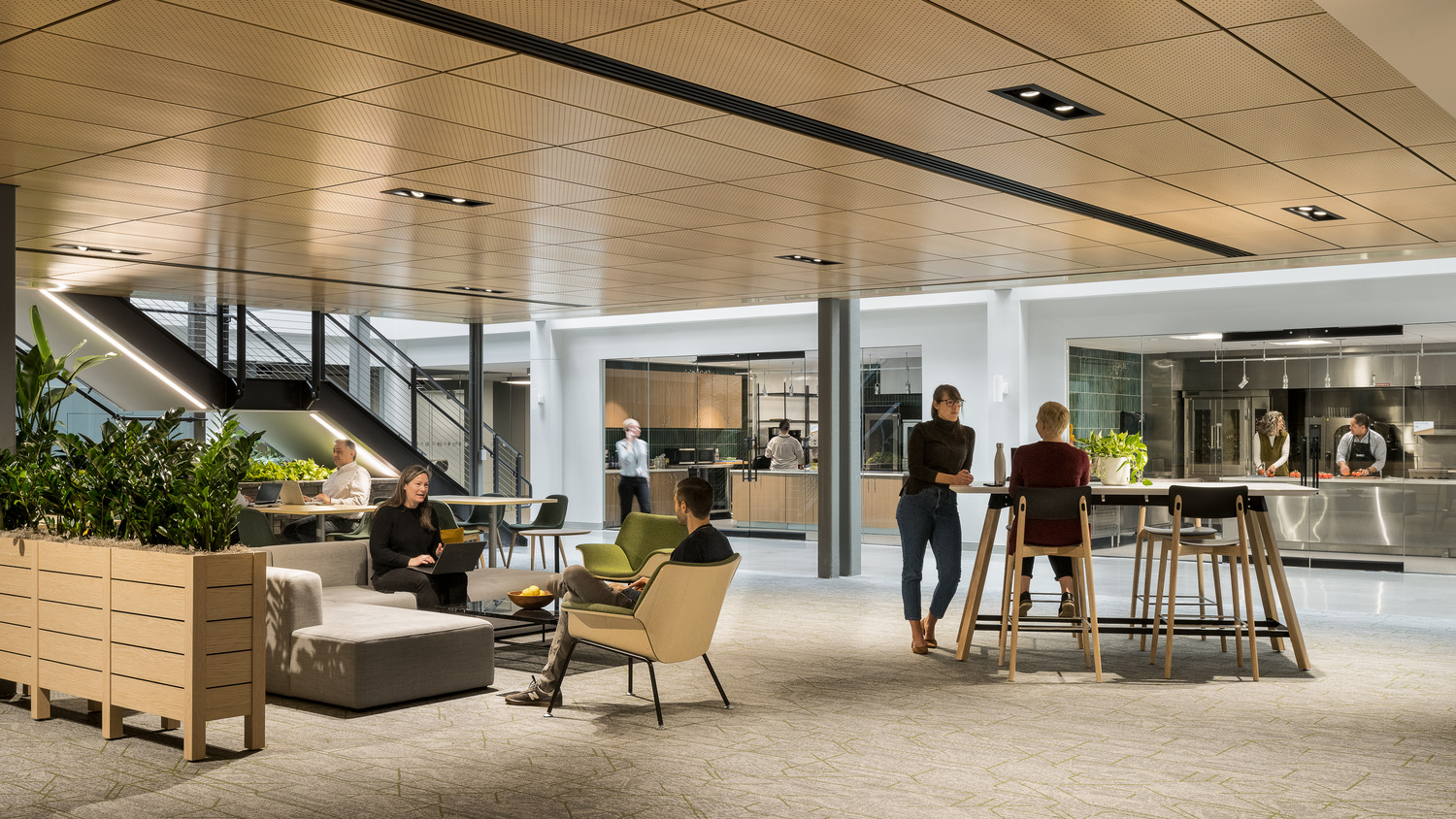
What were once rows of workstations are becoming something more fluid: informal, café-like settings that adapt throughout the day, from focused work to team meetings to large-scale gatherings and trainings.
As clients reconsider how their spaces function, the question we keep hearing is: “Can’t we just change the furniture?”
The answer is most likely no. And understanding why matters before the planning begins.
Occupancy Classification Is a Legal Designation, Not a Design Choice
When a space shifts from a standard office environment to a large gathering space, the building code follows. What looks like a simple furniture swap is actually a change of occupancy classification, from Business (B) to Assembly (A). That distinction triggers a cascade of requirements, and most clients don’t see it coming until they’re already in the middle of it.
The risk of skipping this step isn’t abstract. Code officials and the State Fire Marshal evaluate a change of use. Consequences range from fines to forced operational restrictions to life-safety failures. The earlier this conversation happens, the more options remain on the table.
The Math Changes First
In a business occupancy, the code requires roughly 150 square feet per person across the entire floor plate. Switch to assembly with tables and chairs, what code calls “unconcentrated assembly”, and that drops to 15 square feet per person, measured net within the room. The same 1,000-square-foot space calculated to hold six or seven people under business occupancy can now hold nearly 65.
That density is the point. It’s also what triggers everything that follows.
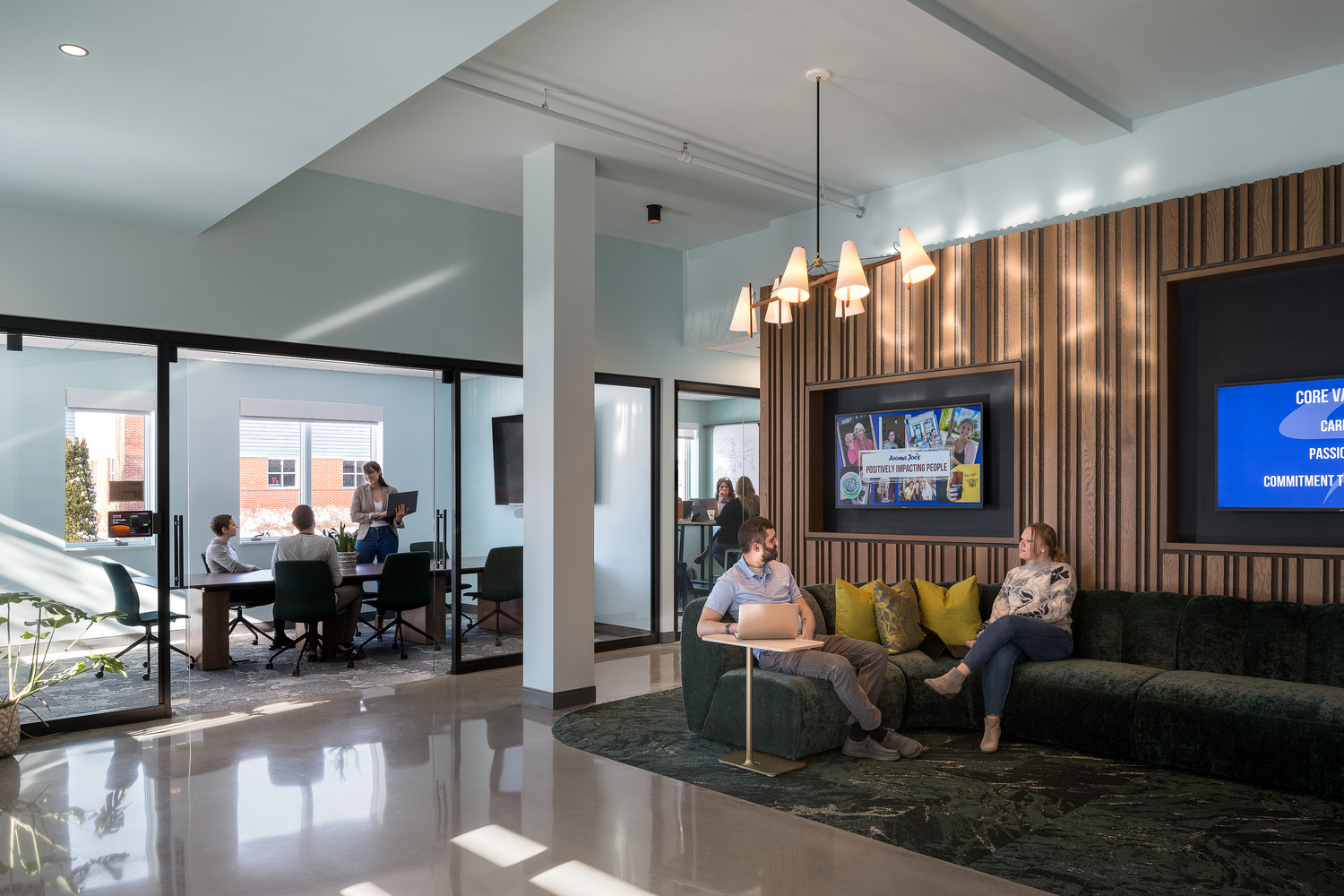
Aroma Joe’s Headquarters Office
What a Change of Occupancy Actually Requires
Egress. Egress requirements are calculated based on occupant load, and assembly spaces can pack significantly more people into the same square footage. Spaces falling under the Assembly occupancy where occupants exceed 49 requires at least two separate exits with doors that swing in the path of egress. As the occupant load of upper floors swell, the required stair widths follow. We’ve worked with clients who discovered that stairs originally sized for office use couldn’t meet the assembly egress requirement with their proposed design. Building a new stair shaft isn’t always a realistic option. In one case, the resolution was a compliance path negotiated with the city and State Fire Marshal, capping occupancy through posted limits and a sign-in system. It keeps the space operational, but it’s a permanent constraint that could have been avoided with early planning.
Fire separation. Both IBC and NFPA require a one-hour fire-rated barrier between assembly and business occupancies, in any direction, regardless of adjacency. That means walls to the deck, fire-rated doors, and fire-rated glass at vision panels. There’s often an additional layer that catches clients off guard: business occupants on upper floors can’t egress through an assembly space. The boundary between uses has to be drawn around the building’s existing circulation paths, not just the spaces themselves; a detail that reshapes the design strategy considerably.
Plumbing. Fixture counts are tied directly to occupant load. A space designed for ten people doesn’t have adequate facilities for sixty.
Mechanical. Business HVAC systems are sized for low-density occupancy. Assembly spaces generate significantly more heat and CO2, and the existing infrastructure rarely keeps pace. Cooling capacity and fresh-air ventilation both require recalculation, and in most cases, meaningful upgrades. It’s a separate scope item from the architectural work, and one that consistently surprises clients who assumed the systems would carry over.
Accessibility. A change of use triggers a full barrier-free compliance review: path of access, path of egress, door clearances, ramp compliance, railings, hardware, and accessible restroom stalls. It’s a comprehensive evaluation, and in older buildings especially, it can surface issues well beyond the assembly space itself.
Elevators and sprinklers may also require upgrades depending on the scope and age of the building. A “Change of Use” we are discussing here triggers a higher level of upgrades and compliance negating the “grandfathered” non-compliant elevator.
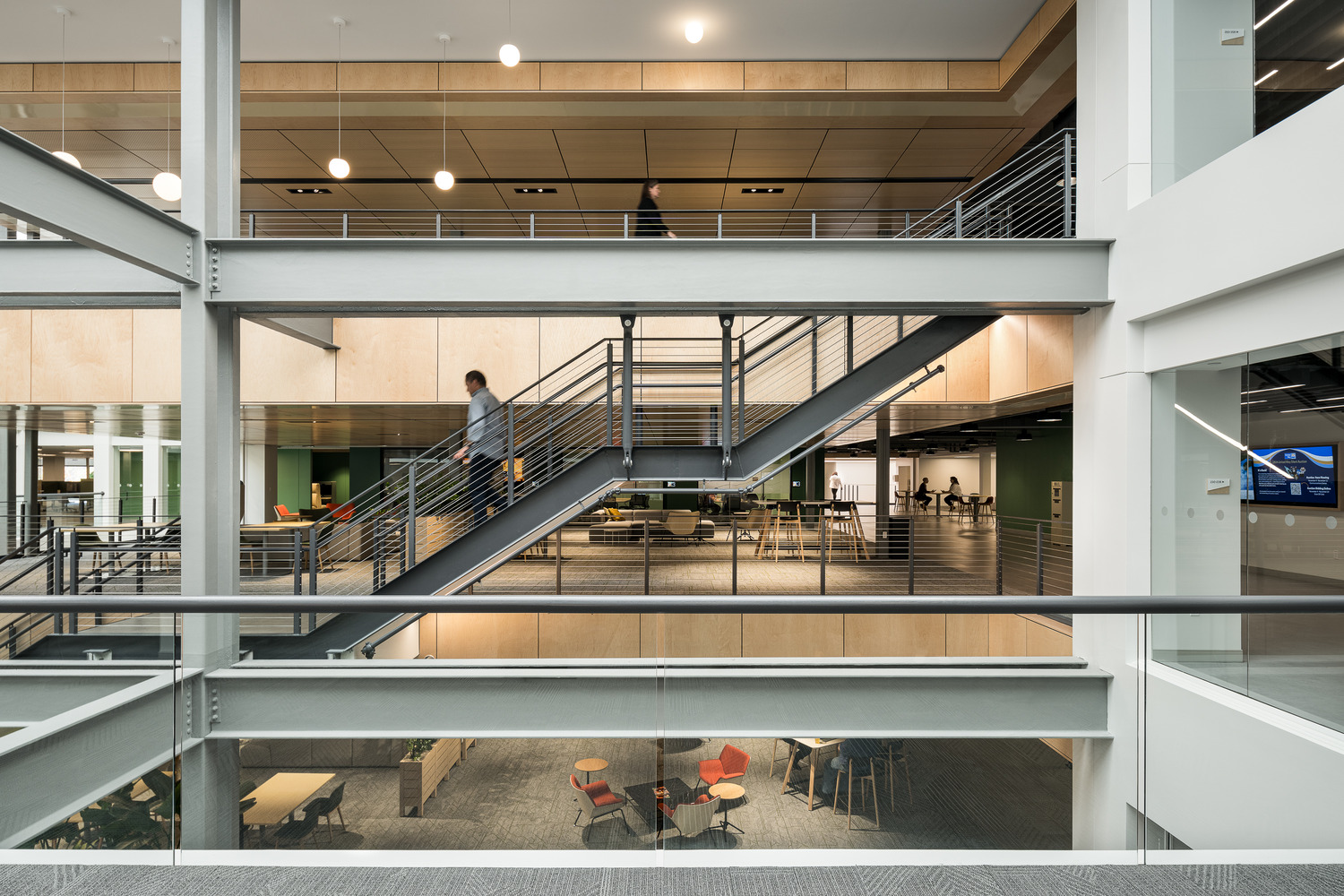
Hannaford Headquarters Office
The Code Is Evolving
Recent IBC changes mean meeting rooms can no longer be covered under a single occupant load factor; rooms above and below 450 square feet are now evaluated separately, often increasing the calculated density on floors that assumed they were safely within business occupancy territory. Jurisdictional interpretation also varies, and in some markets, officials are drawing that line more precisely than ever. It’s another reason to engage early: what passed review five years ago may not today.
Get the Code Right Before You Get Started
Before committing to any spatial change, start with a code analysis and feasibility study. It defines the full scope early: egress, separation, plumbing, mechanical, accessibility, when there’s still room to make smart decisions rather than costly corrections. These requirements exist for a reason: they’re the framework that keeps people safe. This is also where integrated architecture and engineering deliver its clearest value. Egress may affect structure. Mechanical affects ceiling heights. Fire separation affects the glazing budget. The earlier those conversations happen, the better and safer the outcome.
The demand for gathering space isn’t slowing down. The buildings just need to be designed to meet it.
Jeana Stewart, NCIDQ, LEED AP, WELL AP, Principal, Director of Workplace Practice, leads SMRT’s workplace practice with a focus on people-centered design and organizational strategy. With more than 16 years of experience, she works alongside clients to translate how their people work, and how that’s changing, into environments that support both performance and culture.
Nat Cram, AIA, NCARB, LEED AP, Senior Architect, Project Manager, brings more than 20 years of architectural experience across higher education, workplace, hospitality, and government sectors. At SMRT, he guides multidisciplinary teams through complex projects, balancing technical precision with a focus on how design shapes the experience of the people who use a space every day.