
The Protein Race: 5 Critical Topics to Consider When Designing High-Performance Aquaculture Facilities
Designing for the Future of Protein
As the world gets hungrier for sustainable protein, land-based aquaculture, specifically indoor salmon farming, has evolved from a cool idea to a critical solution. But taking fish out of the ocean and putting them into a sophisticated indoor facility is an entirely different ballgame. It requires a massive architectural and engineering lift.
In our work with aquaculture leaders, we’ve found that success happens where a rock-solid bioplan intersects with ingeniously pragmatic engineering. If you’re developing one of these facilities, here are 5 critical topics to keep in mind:
1. The Bioplan is the North Star
In land-based aquaculture, the fish are the focus. All the facility’s critical functions are dictated by the bioplan. This plan aligns species selection and production goals for the facility and helps the team design a project that achieves consistent, high-quality harvests for delivery to market. This strategic production plan dictates every detail, from how much food is needed on site to what size and quantity of tanks are needed to best cycle the maturing fish through the facility, to how much waste will need to be collected along the way. Combining these demands with the Recirculating Aquaculture System (RAS) design, the building footprint and infrastructure requirements of the project become clear.
-
- Case in Point: For the Nordic Aquafarms project in Belfast, Maine, the bioplan led to 900,000 square feet of process space and 16 megawatts of backup power generation. Every single square foot and kilowatt was in direct response to what the salmon needed as they moved from hatchery through to grow-out.
2. Managing Inside Rain
Indoor aquaculture creates a unique marine environment that is brutal on a building. When high humidity meets low temperatures above open-top tanks, you risk inside “rain” (from condensation) contaminating the fishes’ carefully created ecosystem if your HVAC system and building envelope aren’t interacting with each other correctly.
We also have to watch out for hidden corrosion and rot. With an interior environment that is continuously cool and humid, condensation can form inside the wall and roof assemblies, compromising the building from the inside out. Taking the time to model the wall construction using the right interior conditions and the various weather conditions can be the difference between a long-lasting building and one that crumbles around your livestock.
3. Navigating the Tetris of Underground Infrastructure
While the facility might look like a quiet warehouse from the outside, the infrastructure underground is incredibly dense. There are miles of underground piping that require Tetris-level coordination during design.
You also have to think about the happiness of the livestock. Fish are incredibly sensitive to noise and vibration. Be careful about selecting a site near a heavy rail line or other industrial vibration; your growth rates and bottom lines will suffer. Finding a site that balances the right structural environment with access to utility infrastructure is a massive puzzle. That’s why brownfield redevelopments are becoming so attractive.
-
- Case in Point: The Great Northern Salmon project in Millinocket, ME is a strong example of brownfield redevelopment, reusing a former paper mill’s infrastructure, including power, water, and available labor pool. It helps revive local industry while supporting a more sustainable domestic food supply. The team also invested significant time in mapping existing infrastructure and coordinating it with the new systems required.
4. Engineering for the Bottom Line
At the end of the day, salmon is a staple product, which means every design choice must respect the ROI. We work with our clients to find the simplest, safest, and most cost-effective way to move air and water.
This is where energy innovation becomes a win-win. Capitalizing on ideas such as capturing heat from wastewater streams as a source of energy for space conditioning or pre-treating intake water to save on utility bills makes sustainability and profitability go hand-in-hand.
5. Building Confidence for the Win
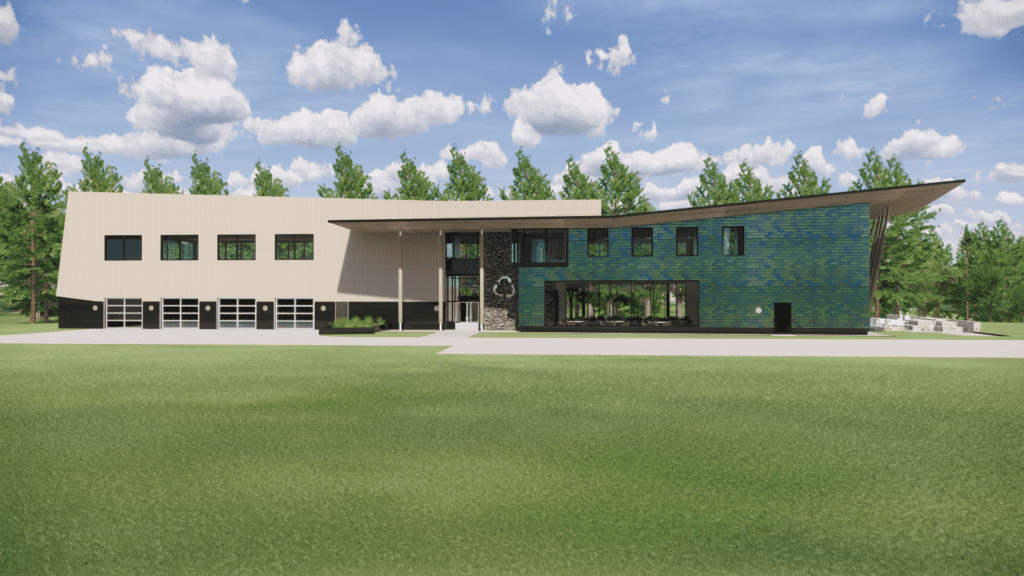
Finally, these projects need to attract significant capital. Early-stage renderings and smart site layouts are vital tools for validating concepts and pitching to investors. They help both the client and potential investors visualize the completed, high-performing campus even on a muddy greenfield or an industrial site that’s being repurposed.
The Bottom Line
The shift toward land-based aquaculture is one of the most significant movements in global food production, but the margin for error is razor-thin. You can’t just use a standard industrial approach. It takes a unified strategy where the biology of the fish, biosecurity approaches, and coordination of process systems dictate the engineering of the building.
By getting the architects, engineers, biologists and process-experts in the same room early, we move faster, hit fewer hurdles, and ultimately build a resilient asset that provides returns for investors and high-quality protein for growing world demand.
Andrew Bradley, PE, is a Senior Principal and Senior Structural Engineer at SMRT Architects & Engineers with more than 30 years of experience leading complex, multidisciplinary projects. He specializes in finding integrated structural solutions that align performance, cost, and constructability from the earliest stages of design.