
What RAPID + TCT Revealed About Additive Manufacturing’s Most Urgent Opportunity
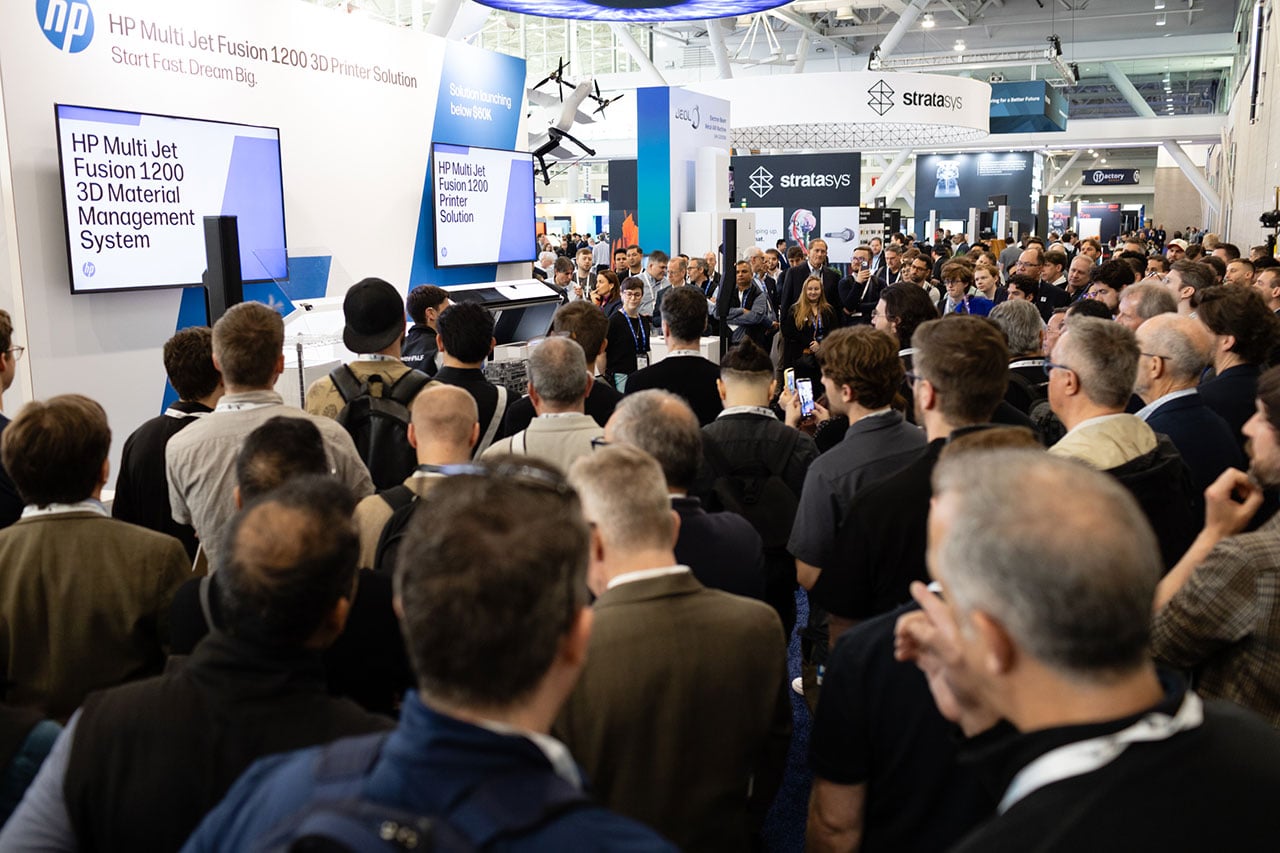
Earlier this month, SMRT’s Nick Hadiaris and I attended RAPID + TCT in Boston, North America’s largest additive manufacturing conference. The show floor covered the full spectrum: large-scale aerospace components, boat hull tooling, industrial molds, materials innovation across polymers and metals. The breadth of what additive manufacturing can do today is well-documented. The more pressing question, at least from a defense readiness standpoint, is where it needs to go next.
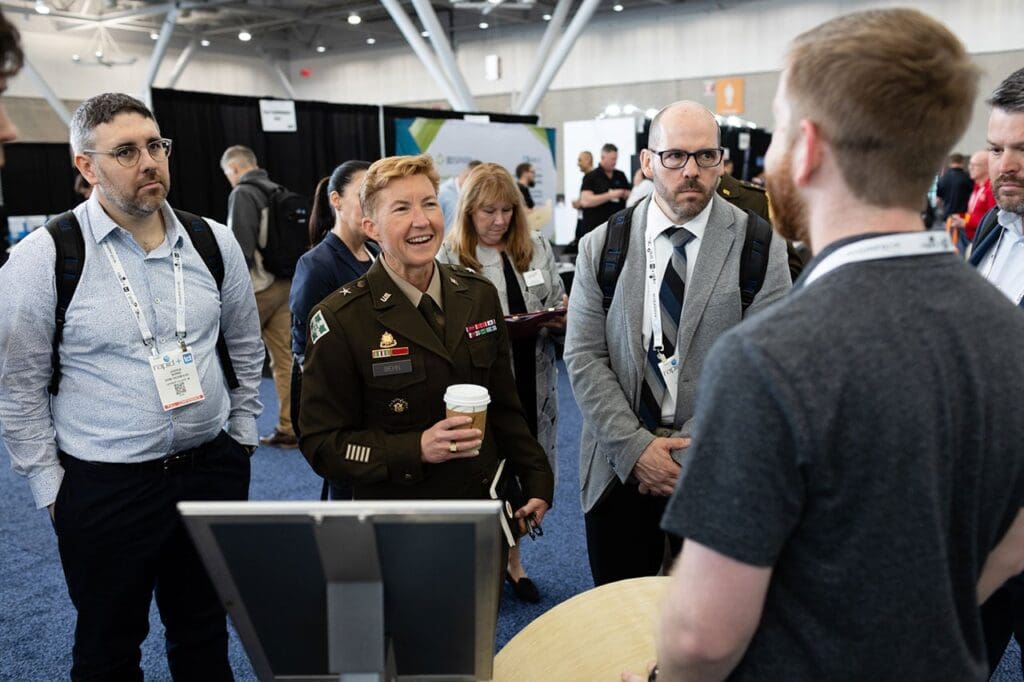
Brigadier General Beth Behn, Commanding General of the U.S. Army Tank-automotive and Armaments Command (TACOM), addressed that question directly in her keynote. The highest-impact near-term application of additive manufacturing in aerospace and defense isn’t large structural components. It’s the high-failure, high-demand small parts that keep ground platforms, tanks, Humvees, Bradley fighting vehicles, operational. These parts are difficult to source quickly, many are strong candidates for additive solutions, and the supply chain bottleneck around them is costing the Army measurable readiness every day.
The DoD’s parts qualification process exists for good reason: warfighter readiness depends on reliable equipment, and supplier qualification standards are part of how that reliability is maintained. That same process, however, makes it difficult to justify manufacturing small quantities of parts on short notice, even when equipment is sitting non-mission capable while units wait. A February 2026 analysis in Breaking Defense framed the problem precisely: the Army is mispricing readiness. Every day an Abrams sits deadlined waiting on a part is a training day that doesn’t happen. The Army knows what it costs to field and train a crew for a year, which means the value of each lost training day is calculable. Procurement policy weighs the cost of producing a part, but not what the unit loses while waiting for it.
From my time in the Navy, I can say the small issues in the supply chain can lead quickly to outsized problems. I’ve seen a single hard-to-get part delay a deployment, force a detour to a foreign port or for an underway replenishment, both of which affect mission readiness, or cannibalizing a component from a sister ship because the supply chain couldn’t keep pace with the operational requirement.
What’s encouraging is that TACOM is actively working to close that gap. Of the more than 55,000 parts evaluated for advanced manufacturing consideration, the Ground Vehicle Systems Center has identified 2,342 viable candidates. As of last fall, TACOM had fully-qualified 61 parts for Army platforms. The next benchmark: 425 qualified parts within 12 months.
General Behn’s presence at RAPID + TCT was itself a signal: the Army is looking to industry as a partner in solving this, and the qualification pathway is opening. That’s worth paying attention to.
Ben Halleck, PE, is Director of Advanced Manufacturing at SMRT Architects & Engineers. Ben helps clients solve problems across a diverse market spectrum, including microelectronics, automotive, and aerospace. He previously served a decade in the U.S. Navy’s nuclear submarine community.