
One Year In: What the Glens Falls PACE Center Is Teaching Us
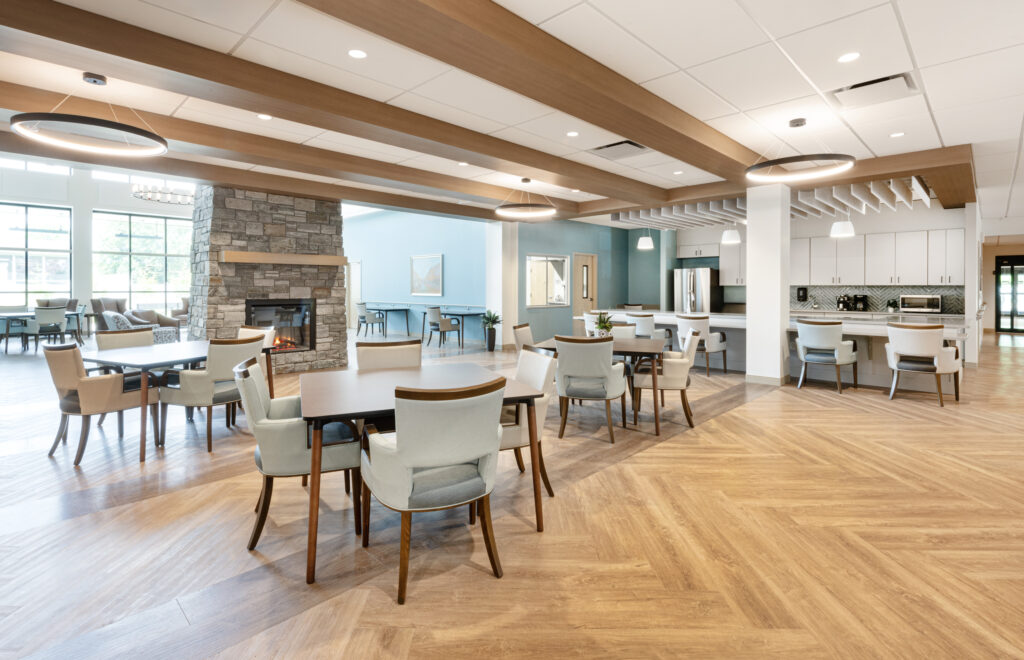
Last year, we wrote about the Glens Falls Health Campus as New York State’s first Federally Qualified Health Center (FQHC)-sponsored PACE program, and the intentional design decisions behind it. A year into operation, Hudson Headwaters Health Network and SMRT sat down for a post-occupancy review of the PACE center, the organization’s first, to look at what is working, what the building didn’t anticipate, and…
Building From Within: A Health & Wellness Leadership Transition

At SMRT, leadership transitions begin years before the announcement, in the day-to-day work of a practice: the client relationships built over time, the clinical problems solved together, the expertise developed project by project. That’s the context for the news we’re sharing today. Rebecca Casey has been named Director of Health & Wellness Practice, effective July 1. And while the title is new,…
A Village Takes Care of Its Own
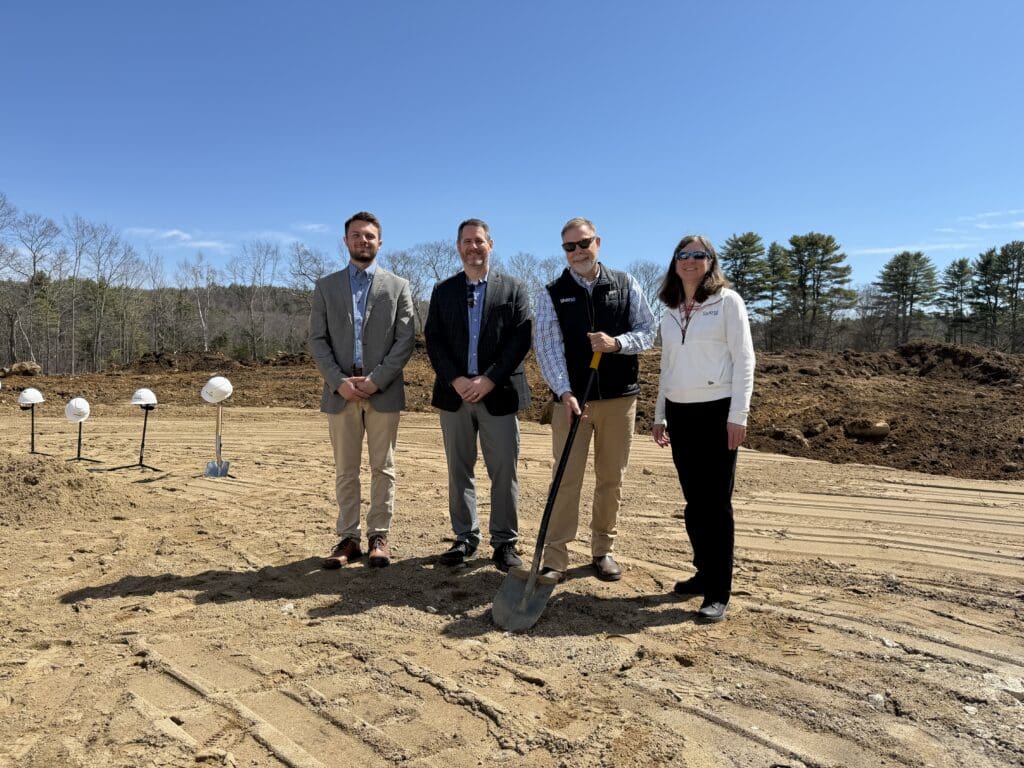
On a clear April morning in Tamworth, New Hampshire, SMRT Architects & Engineers joined the Betty C. Ketchum Foundation, local officials, state legislators, and members of the Tamworth community to break ground on Tamworth Village Commons. For SMRT, it was more than a ceremonial moment: shovel in hand alongside neighbors, caregivers, and elected officials, it was a…
What PDC Reminded Me About Designing for People

Every year, the Planning, Design & Construction (PDC) Summit offers something unexpected. This year, it started for me with a concept: vuja dé. Borrowed from ThinkLab, the term, coined by George Carlin and later developed by organizational theorist Adam Grant, describes the opposite of déjà vu: seeing something familiar as if for the first time. (A fun coincidence for the francophiles: it also happens to…
Integrating Wellness: How Hudson Headwaters is Setting a New Standard for Community Care
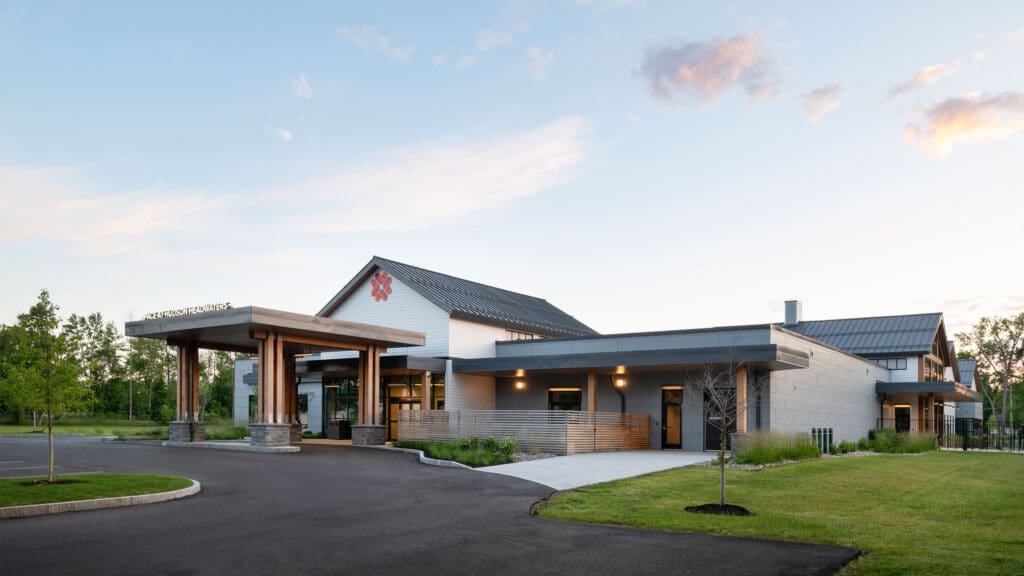
In the evolving landscape of healthcare, the safety net is moving beyond clinic walls and into the heart of the neighborhood. At the new Glens Falls, NY Health Campus, Hudson Headwaters Health Network (HHHN) has realized a dual mission: enhancing community access to essential medical services while launching a new approach to senior care. This unified wellness campus…
5 Steps to Balance Care and Operations in Remote Skilled Nursing Design

Designing a skilled nursing facility (SNF) in a remote or island setting, like those we’ve tackled in Northern Maine and Nantucket, is a unique opportunity. The challenges of isolation, labor shortages, and logistics serve as powerful catalysts, forcing design teams to rethink the standard model and to focus on operational efficiency and human well-being. At SMRT, we approach each project with a structured, integrated…
Rebecca Casey and Jessica King Share Expertise on Adaptive Reuse of Retail for Outpatient Care in Healthcare Facilities Today

Adaptive reuse of empty big-box stores is an increasingly popular strategy for expanding healthcare services in both urban and suburban settings, redefining how communities’ access crucial medical care. Repurposing these retail spaces offers a unique and sustainable opportunity to bring essential services closer to patients, often in highly visible, easily accessible locations with ample parking. …
Optimizing Emergency Department Design: A Blueprint for Flexibility, Safety, and Resilience

Emergency Departments (EDs) are the front doors to hospitals and the safety nets for communities. But with rising patient volumes, complex care needs, and increasing safety concerns, designing these critical spaces requires more than just meeting code. It demands smart, adaptable solutions that improve both patient experience and operational performance. Understanding the Pressures on Today’s…
Second Chances: Reimagining Big-Box Retail as Healthcare Hubs

The story of architecture is one of continuous evolution, where second chances breathe new life into spaces that have lost their original purpose. In today’s context, few building types are more emblematic of this opportunity than big-box stores. As of Q4 2024, the retail vacancy rate in the United States was 5.4% (Cushman & Wakefield…
Ellen Belknap featured on Northern Light Health’s Podcast

Healthy buildings are a fundamental component of delivering quality healthcare. Healthy buildings are better for the end user, the staff, the family, and of course, the patients. Ellen Belknap, Senior Principal | Senior Architect In a recent Northern Light Health Sustainable Healthcare podcast episode, Ellen Belknap discussed how the built environment can significantly benefit our…