
Integrating Wellness: How Hudson Headwaters is Setting a New Standard for Community Care
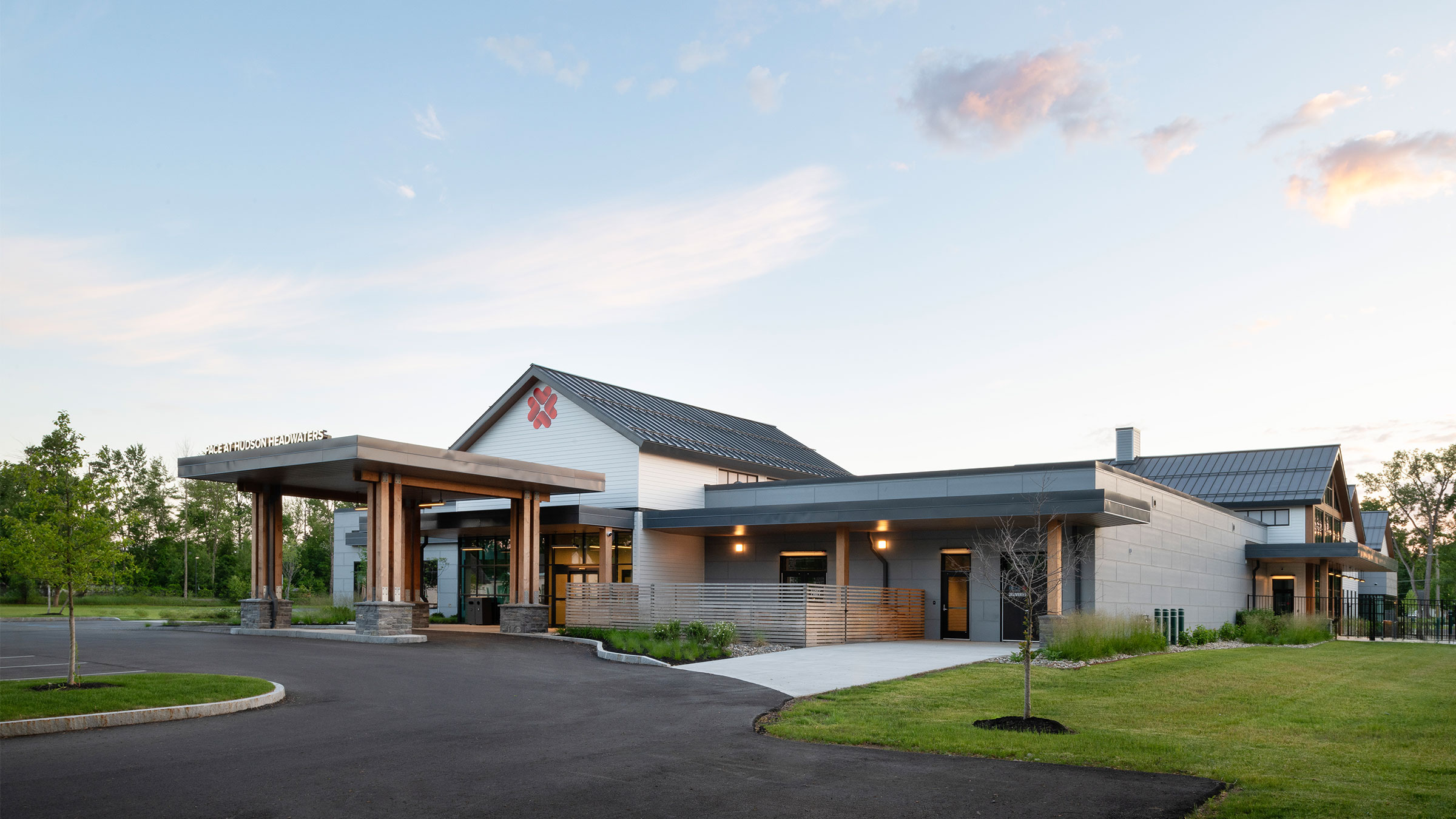
In the evolving landscape of healthcare, the safety net is moving beyond clinic walls and into the heart of the neighborhood. At the new Glens Falls, NY Health Campus, Hudson Headwaters Health Network (HHHN) has realized a dual mission: enhancing community access to essential medical services while launching a new approach to senior care.
This unified wellness campus stands as a pioneer: the first Federally Qualified Health Center (FQHC)-sponsored PACE program in New York State.
What is PACE? Solving the Senior Care Crisis
For many, the transition from independent living to a nursing home is a daunting prospect. PACE (Program of All-Inclusive Care for the Elderly) provides a middle path. It is designed to help older adults age in place with dignity. Nationally, PACE is a rapidly growing model, with nearly 90,000 seniors enrolled across 200 organizations. Despite all participants being nursing-home eligible, the model is so effective that roughly 94% of participants continue to live safely in their communities.
In New York State, where enrollment has surged by nearly 4,000 participants in recent years, PACE is becoming the gold standard for holistic, coordinated care. By integrating primary care, physical therapy, social engagement, and meals into one hub, PACE supports participants and their caregivers alike. As Linda Spokane, VP of Population Health Management at Hudson Headwaters, puts it: PACE offers a cost-effective model of care that improves the well-being of the entire community.
SMRT’s Expertise: Designing for Dignity and Performance
Designing a PACE center requires a purposefully balanced blend of clinical precision and empathetic architecture. SMRT approached the Glens Falls campus with a focus on three pillars:
1. Urban Integration: Being a Good Neighbor
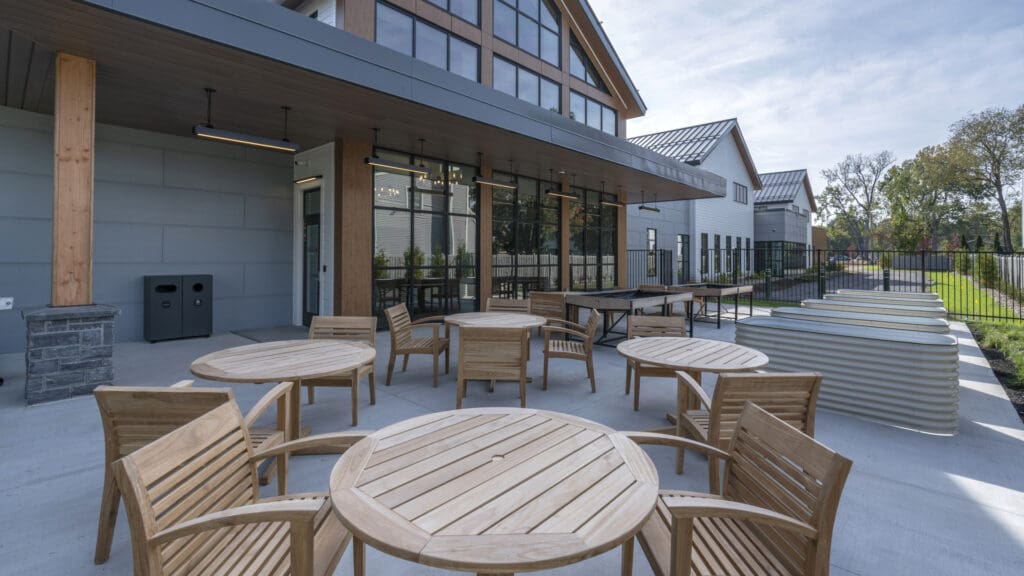
Rather than an isolated medical island, the campus is stitched into the urban fabric.
- Residential Harmony: Because the large, single-story footprint abuts a residential neighborhood, SMRT subdivided the building’s volume into residential-friendly components and rooflines. This strategy masks heavy mechanical and electrical rooftop equipment, ensuring the facility feels like a home.
- Pedestrian Connectivity: The master plan prioritizes pathways that link the facility to the surrounding neighborhood, reducing institutional barriers through a palette of brick, stone, and glazing.
- Community Utility: Flexible multi-purpose rooms serve as a civic hub for health classes, making the building a permanent neighborhood asset.
2. The Symbiotic Campus: Clinical Efficiency & Regulatory Rigor
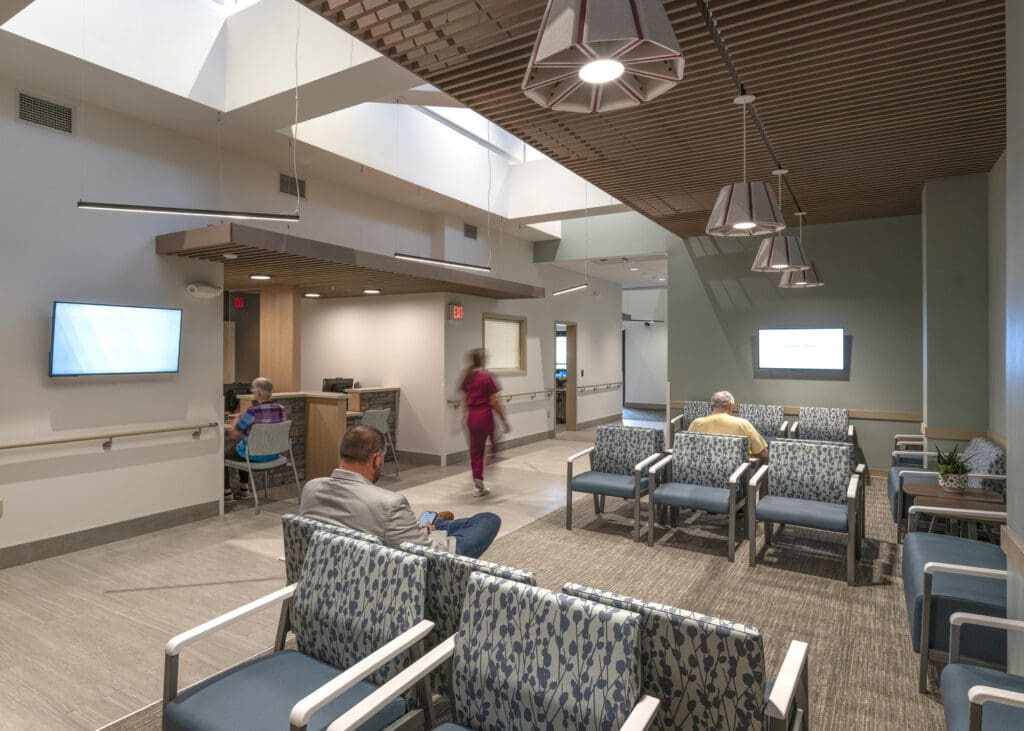
The Glens Falls campus features a unique co-location of a Medical Office Building (MOB) and the PACE center. While they share a cooperative relationship, New York’s Article 28 regulatory requirements necessitated a sophisticated design to keep the programs distinct.
- Managed Access: SMRT designed a unique layout that allows for internal flow between the clinic and PACE while maintaining the strict physical separation required by state law.
- Standardized Clinical Pods: To support high-volume needs, the medical building utilizes repeatable floor plans with decentralized teamwork areas. These pods provide open sightlines for staff, optimizing patient observation and helping immediate communication.
3. The PACE Center: A Therapeutic Sanctuary
The interior architecture of the PACE Center was driven by Evidence-Based Design (EBD) to minimize stress and maximize independence:
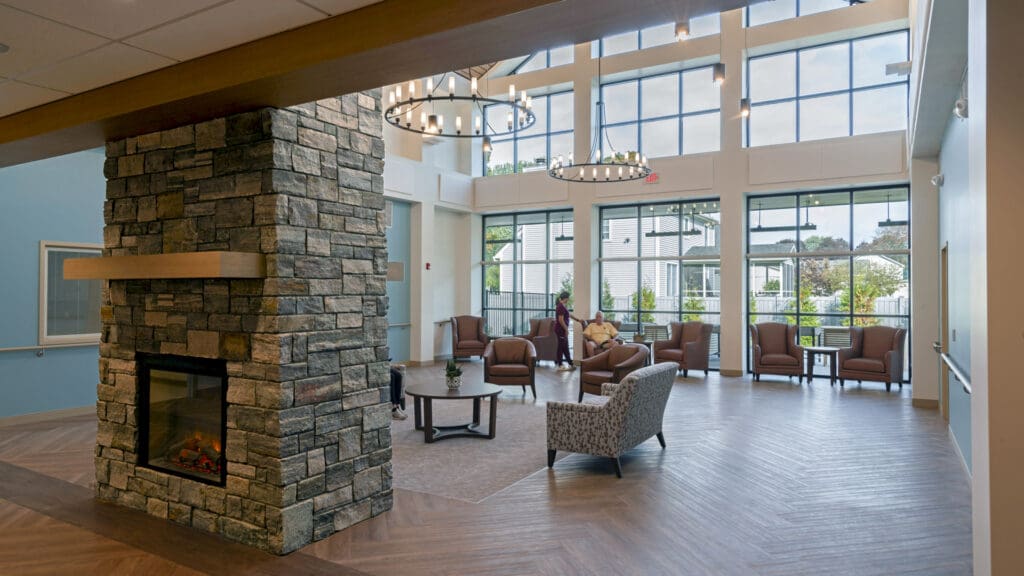
- Central Activity Hub: The open-plan day center is the heart of the facility. It provides clear sightlines for staff while remaining flexible enough to host physical therapy, multiple participant activities, and social meals simultaneously.
- Efficiency of Movement: Ancillary spaces, including quiet rooms, showers, and counseling offices, are accessible directly from the central hub. This eliminates long, confusing corridors, which are essential for a population where many participants may face dementia-related challenges.
- Biophilic Connection: To support geriatric mental health, the design features abundant daylight, views of nature, and direct, secure access to a dedicated outdoor garden.
A Vision for Accessible Care
The establishment of the Glens Falls Health Campus is the result of a long-term community effort. Tucker Slingerland, M.D., CEO of Hudson Headwaters, notes that this facility expands access for all, regardless of income or insurance.
By strategically balancing the operational demands of a modern clinic with the complex social needs of senior care, HHHN and SMRT have designed an innovative infrastructure that will serve the region for generations to come.