
Where federal and private delivery converge: Takeaways from SAME and DBIA
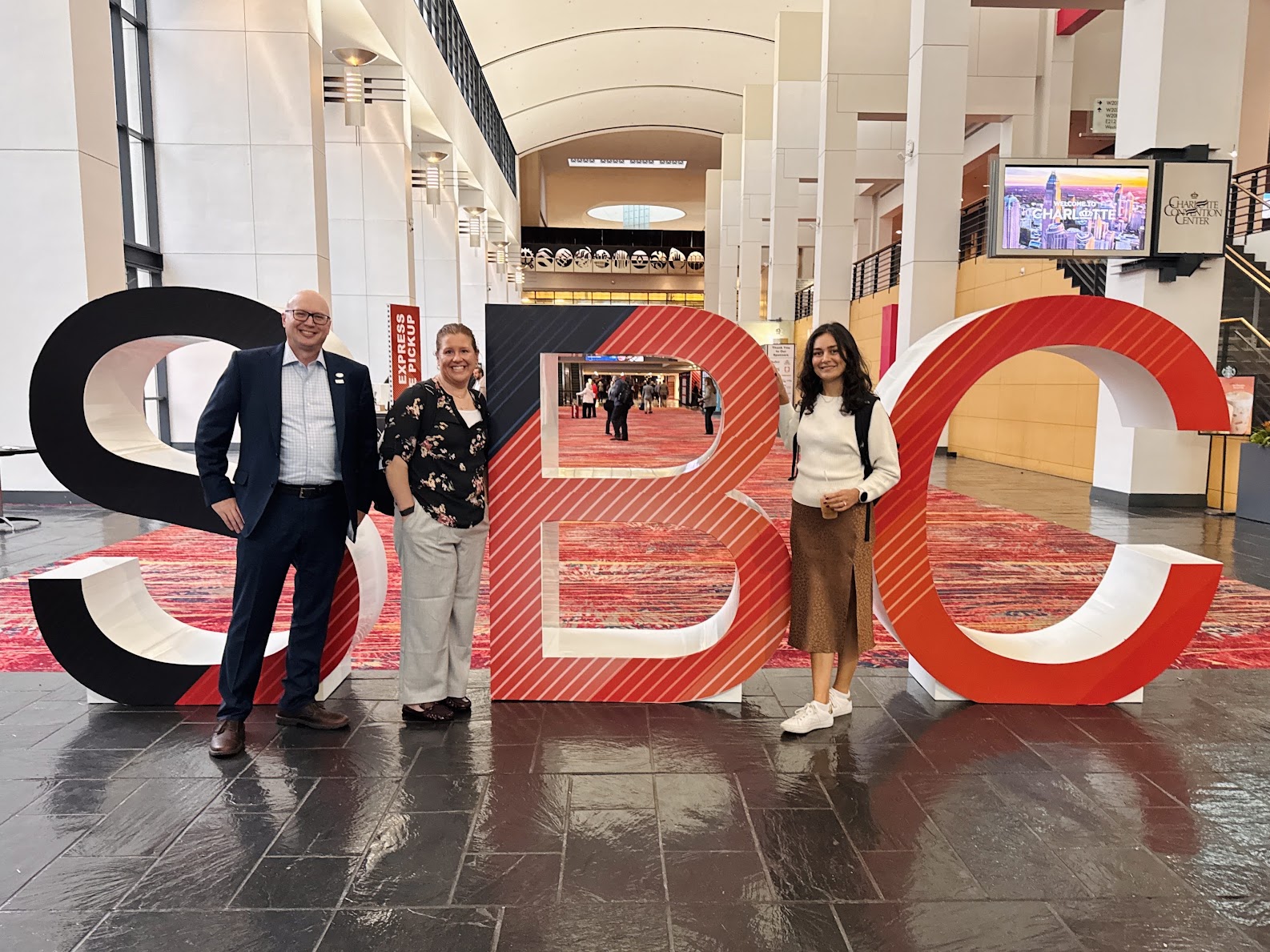
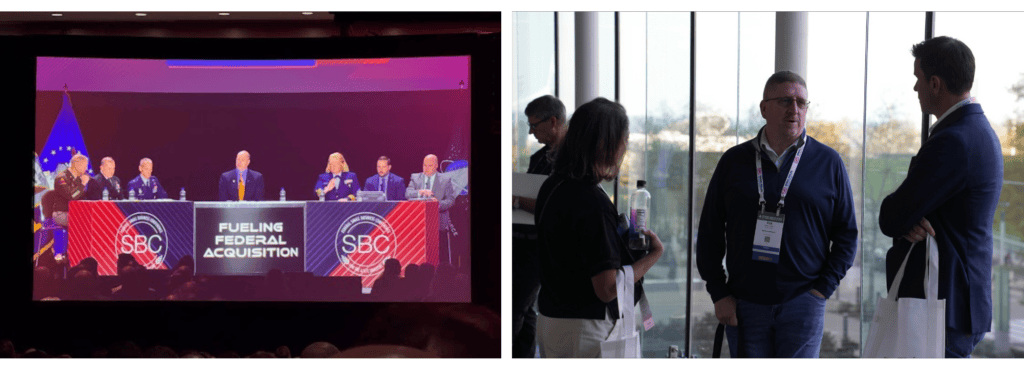
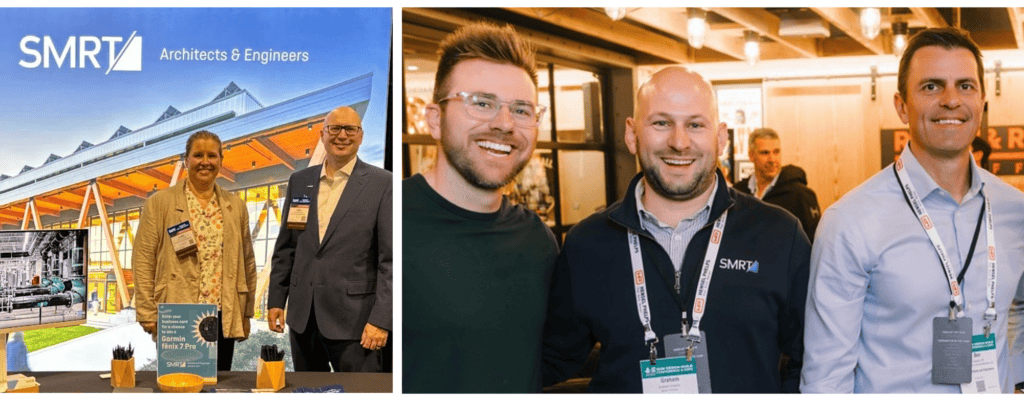
Federal agencies and private-sector owners operate in different environments, but the challenges shaping their facilities are increasingly connected. In early November, two conferences brought those challenges into focus: the Society for American Military Engineers (SAME) Federal Small Business Conference in Charlotte, North Carolina, and the Design-Build Institute of America (DBIA) Conference & Expo in Cleveland, Ohio. Discussions around faster delivery, artificial intelligence, energy resilience, flexible facilities, and evolving project risks kept returning to one priority: bringing the right people together early.
Following the conferences, we spoke with Nick Hadiaris, who leads SMRT’s Government & Civic practice, and Ben Halleck, who leads SMRT’s Advanced Manufacturing practice, about what they heard and what those insights mean for owners planning complex projects.
Across the two conferences, what theme stood out most?
Ben: DBIA opened with a strong focus on technology, particularly AI and its potential applications in design and construction. As the conference continued, the conversation returned to people. Technology can improve coordination and efficiency, but complex projects still require experienced teams, strong relationships, and the interpersonal skills to work through difficult decisions. Tools support project delivery, but at the end of the day it takes the right ream with the right experience to get hard projects completed.
Nick: The SAME conference emphasized the need to accelerate delivery. Traditional, multiyear processes can struggle to keep pace with construction-cost escalation and changing mission requirements. By the time some projects reach construction, the original budget may no longer support the intended scope.
Owners are becoming more open to measured uncertainty in exchange for speed, flexibility, and adaptability. A federal facility may be designed for a 50-year lifespan, while its mission or technology changes much sooner. Design-build allows the owner, architect-engineer, and contractor to address those needs together early.
What changes are you seeing in design-build?
Nick: Progressive design-build and design-build-to-budget give owners more flexibility before they commit to a final scope and price. In progressive design-build, the contractor and design team help define the project before pricing is finalized. In design-build-to-budget, the owner establishes the available funding and mission-critical requirements, then works with the team to deliver as much of the program as possible within those parameters. Both approaches help teams respond to changing costs, supply-chain conditions, and material availability. Owners retain a strong voice while drawing on the design and construction expertise behind each decision.
Ben: In the private sector, owners often have a firm date for bringing a product or facility online. They need a delivery method that supports the schedule and provides greater cost visibility. This has driven broader use of design-build and other collaborative models. Influence is also moving between the private and federal sectors. While the federal government has done design-build for a long time, there is a renewed intentional push to do more. That was partly influenced by the success of design-build in the private sector, and now, we’re beginning to see that broader influence flowing back to the private side in the form of more first-time prime federal contractors issuing design-build solicitations. In both markets, an integrated team established early has a stronger opportunity to align scope, budget, and schedule.
Where can AI and emerging technologies improve delivery, and where must people lead?
Ben: At the end of the day, AI is a tool that we should treat like other tools. The first step is defining which activities do we only want a human to do even when there’s an AI agent that’s capable. A/E teams have used automation for years to reduce repetitive data entry, improve coordination, and reduce risk. New AI capabilities offer a plethora of automation opportunities, but we need to identify the best applications which may be outside design, like information management, administrative processes, and internal knowledge tools. One national contractor at DBIA discussed saving hundreds of thousands of dollars a year in software subscriptions by creating and deploying AI agents to take over those tasks. We get hung up on the idea that broader AI adoption means we’re asking ChatGPT to design our buildings for us – that is not going to be the case.
Nick: SAME highlighted technologies that could change how facilities are powered and built. Federal installations are exploring greater energy resilience through microgrids and emerging power sources. Industrialized construction can move work into controlled factory environments, improving tolerances, protecting schedules from weather, and reducing construction defects. Large-format additive manufacturing may create further opportunities to fabricate components off-site or at the project location. Each technology addresses a specific need. Its value depends on how well it supports the facility’s mission, delivery strategy, and long-term operations.
How should teams plan for energy resilience as power demands grow?
Nick: Energy resilience was a major focus at SAME, particularly for federal installations that must maintain critical operations when the wider grid is disrupted. Advanced nuclear technologies, including small modular reactors and microreactors, may eventually support remote and mission-critical locations. Resilient infrastructure must also accommodate change. Early planning for electrical capacity, controls, interconnections, thermal infrastructure, and behind-the-meter systems can preserve pathways for future generation and storage. This approach supports current operations while allowing owners to incorporate new technologies without rebuilding core infrastructure.
Ben: We’re at the beginning of a second data center boom, largely driven by demand from AI platforms. In the early 2010s, the enterprise scale data center campuses we were building were typically around 30-megawatts. Now it’s 1-gigawatt per site for the biggest ones, and no utility has that kind of capacity to spare. Those operators are looking outside the grid to things like gas turbine generators for normal power. This is on top of manufacturing expansions and electrification of buildings in general. So, there is a large and growing gap between demand and capacity. We need to be thinking about how to bridge that gap, and due to the breadth and depth of the inadequacy of our infrastructure, we need to be thinking how we satisfy this project’s requirements, and also how do we address this regionally and nationally.
Small modular reactors are one promising option, although they require substantial supporting infrastructure and remain in the early stages of U.S. deployment. On-site solar, geothermal systems, linear generators, district energy, and waste-heat recovery may also help address capacity and resilience needs. One thing to not overlook is the influence large projects and operators can have on driving utility improvements that benefit nearby communities.
What advice would you give an owner preparing for a design-build project?
Ben: Experience is number one, and it matters across the whole team. An owner who is new to design-build needs partners who know the process well. There are OPMs who are DBIA-certified who can bring enormous value to an owner’s team, and it goes without saying that an A/E and builder team with deep design-build is going to outperform one without. Lacking that design-build experience, teams often default what’s familiar from the adversarial design-bid-build world and lose the schedule, cost, and coordination benefits that are the whole point of design-build.
Nick: Training and experienced partners provide a strong foundation, but the team must also be candid about decisions and risk. Risk should reside with the party best positioned to understand and manage it. Owners understand their property and operations. Contractors understand construction means, methods, and sequencing. Architects and engineers understand design performance and technical integration. When a risk emerges, the team should discuss it openly and determine who can manage it most effectively. That transparency supports better decisions and the collaborative environment design-build requires.
The common thread: Early alignment
The SAME and DBIA conferences approached the industry from different perspectives, yet arrived at the same conclusion: Owners need faster, more adaptable ways to deliver increasingly technical facilities, and that speed depends on integrating the right expertise from the start. New technologies, delivery methods, and energy strategies deliver value when experienced teams apply them through that process.
For owners, the next step is practical. Set mission priorities and funding limits before design begins, select partners with direct design-build experience, and agree on how decisions and risks will be assigned. That foundation lets teams apply innovation with purpose and deliver facilities that can adapt as missions and technologies change over decades of service.