
The Secret Sauce of Enrollment: Why Student-Centered Spaces are the New Campus Differentiator
If you’ve spent any time on a college campus lately, you know the vibe has shifted. It’s no longer about having the most impressive library or the oldest ivy-covered brick walls. Today, the conversation is dominated by enrollment pressures and a generation of students who are, rightfully, asking, “What is the actual experience of being here?”
As someone who spends a lot of time thinking about campus design, I’ve seen a clear trend: the colleges that are standing out are crafting identities through student-centered spaces. Whether it’s a high-tech lab, a social hub, or a world-class training center, these spaces act as physical proof of a university’s commitment to student success and wellness.
Let’s look at how a few institutions are using purposeful design to move the needle.
Academic Identity: More Than Classrooms
We often think of academic spaces as purely functional, but at the University of New England (UNE) and the University of Maine (UMaine), they are powerful recruitment tools.
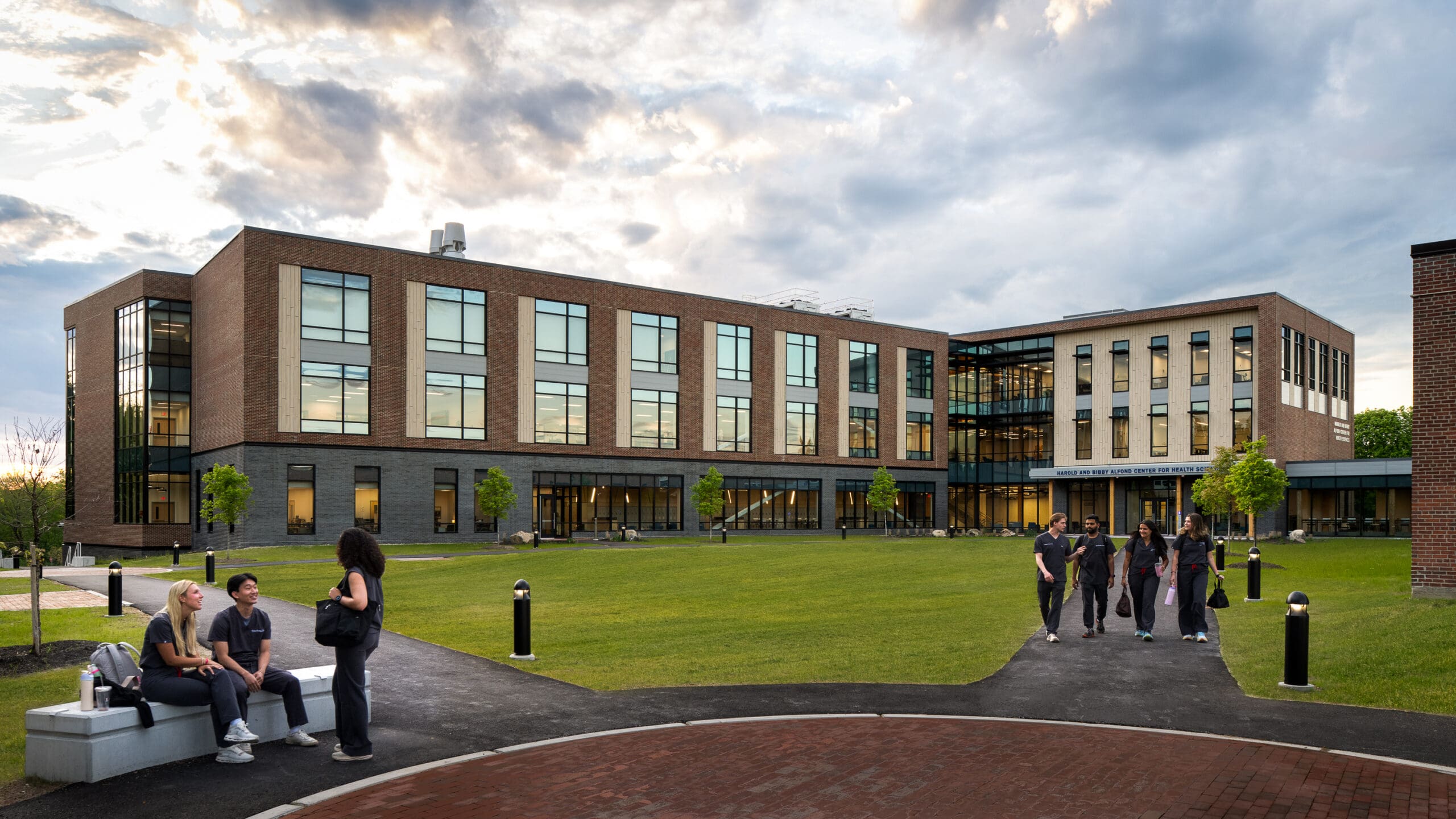
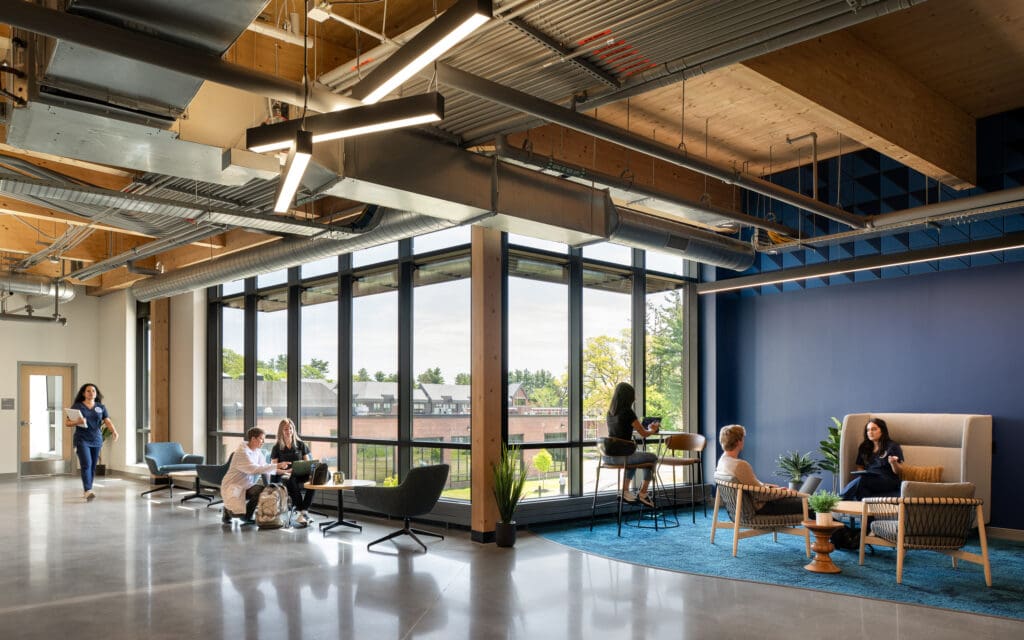
UNE’s Harold and Bibby Alfond Center for Health Sciences is a perfect example of architecture meeting mission. By uniting all healthcare programs under one roof, the design advances interprofessional learning. Students are working in simulation labs and digital health innovation centers that mirror the real-world clinical environments they’ll enter after graduation. But beyond giving students access to real-world technology, it gives them immediate access to interdisciplinary peer groups. It creates a space where effective communication, shared best practices, and mutual respect are built long before they join the medical workforce. The use of warm mass timber and daylight-filled commons makes a high-stress field like medicine feel grounded and human-centered.
Similarly, the GEM Factory of the Future at UMaine is a total game-changer for engineering. It’s home to the world’s largest additive manufacturing labs, but it’s designed with a GEM Gateway atrium that connects students to industry partners. It’s the ultimate power of learning on display. When a prospective student walks through that space, they see impressive equipment and a clear, tangible career path.
Social Connectivity: The Sticky Campus
In a world of remote learning, why come to campus? The answer is connection. Students need sticky, claimable spaces, places they know are purposefully available to them, where they can sit and occupy a spot for hours without the anxiety of being asked to move for the next group. These spaces are the foundation for casual and structured gatherings, as well as impromptu meetings with faculty.
At the University of Southern Maine (USM), the Dubyak Center for Digital Science & Innovation proves that a renovation can redefine a campus. We transformed the second floor of a legacy science building into a vibrant Innovation Technology Café. By using a campus quad circulation concept and floor-to-ceiling glass, we brought light into the core of the building. It’s now a hub where creativity and tech-talk happen over coffee, making the science building a destination rather than just a pass-by or a pass-through experience.
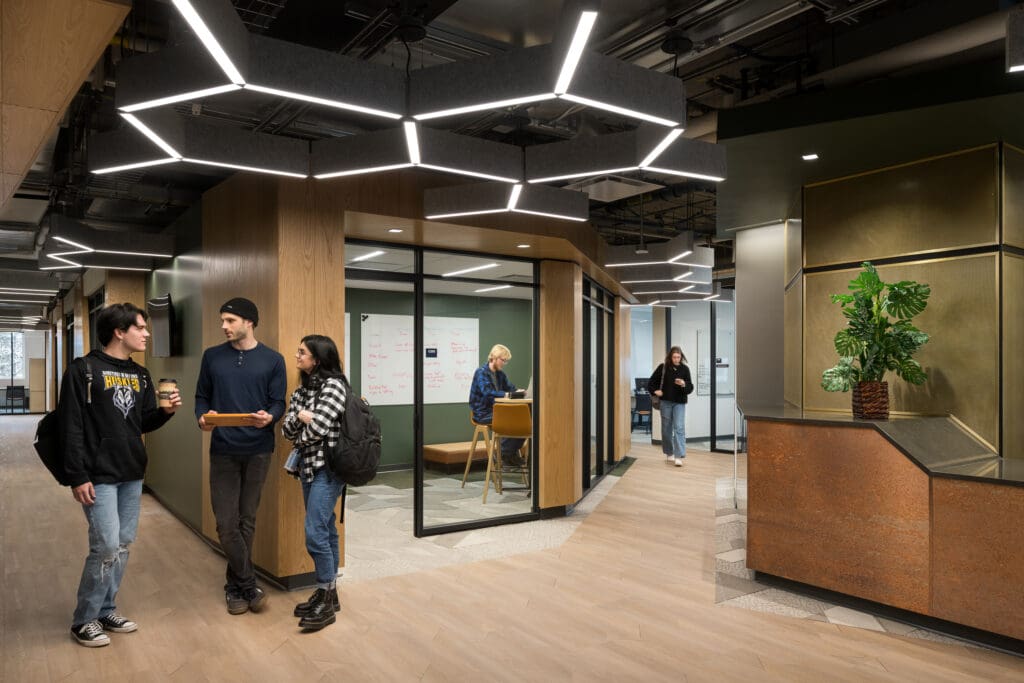
We saw the same dynamic play out at Keene State College’s Carle Hall. We renovated the ground floor commons to purposely lure students out of isolation in their dorm rooms. By providing tailor-made spaces for chilling together, studying, gaming, cooking, or simply being alone, it has become a massive hit, with rave reviews from the residence life staff. Because Carle Hall is a freshman residence, giving these students an immediate opportunity to develop deep friendships and a sense of belonging is key to freshman-to-sophomore retention. In today’s challenging enrollment landscape, retention is just as vital as recruitment, and community is the ultimate differentiator.
Athletic Excellence: The Wellness Differentiator
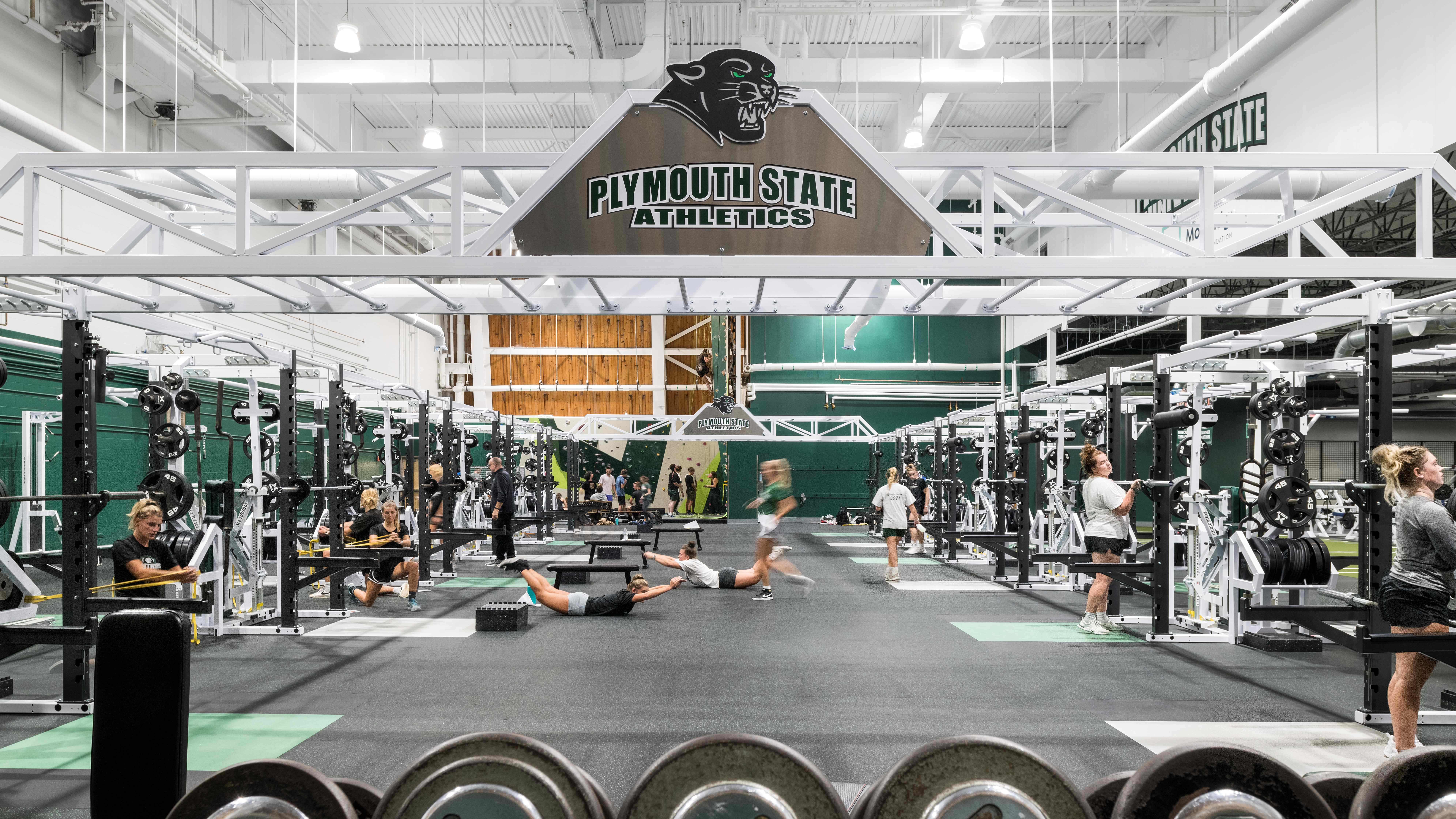
Athletics have always been a cornerstone of campus identity, but the focus has shifted toward holistic performance and wellness. At Plymouth State University (PSU), the Morgridge Strength & Performance Lab has completely leveled the playing field for their NCAA Division III athletes.
We took an old field house and transformed it into a 17,500-square-foot powerhouse. With 24 weight racks and a 45-yard artificial turf strip for rehab and speed training, it’s now the largest facility of its kind in the region. But it’s not just for the star players; it accommodates all 25 varsity sports. This kind of investment sends a loud message to recruits: We care about your physical health, your recovery, and your competitive edge.
The Bottom Line: Design as Strategy
So, why does this matter for enrollment? Because a student’s first impression of a campus is visceral.
When a prospective student visits these spaces, they are looking for place-belonging. They want to see where they will study, where they will meet their best friends, and where they will push their limits. By creating spaces that prioritize wellness, nurture collaboration, and embrace cutting-edge technology, colleges are building infrastructure and a competitive advantage.
Nick Vaughn, AIA NCARB, is a Senior Principal and Director of Education & Athletics at SMRT Architects and Engineers. He specializes in creating high-performance environments that help educational institutions thrive.