
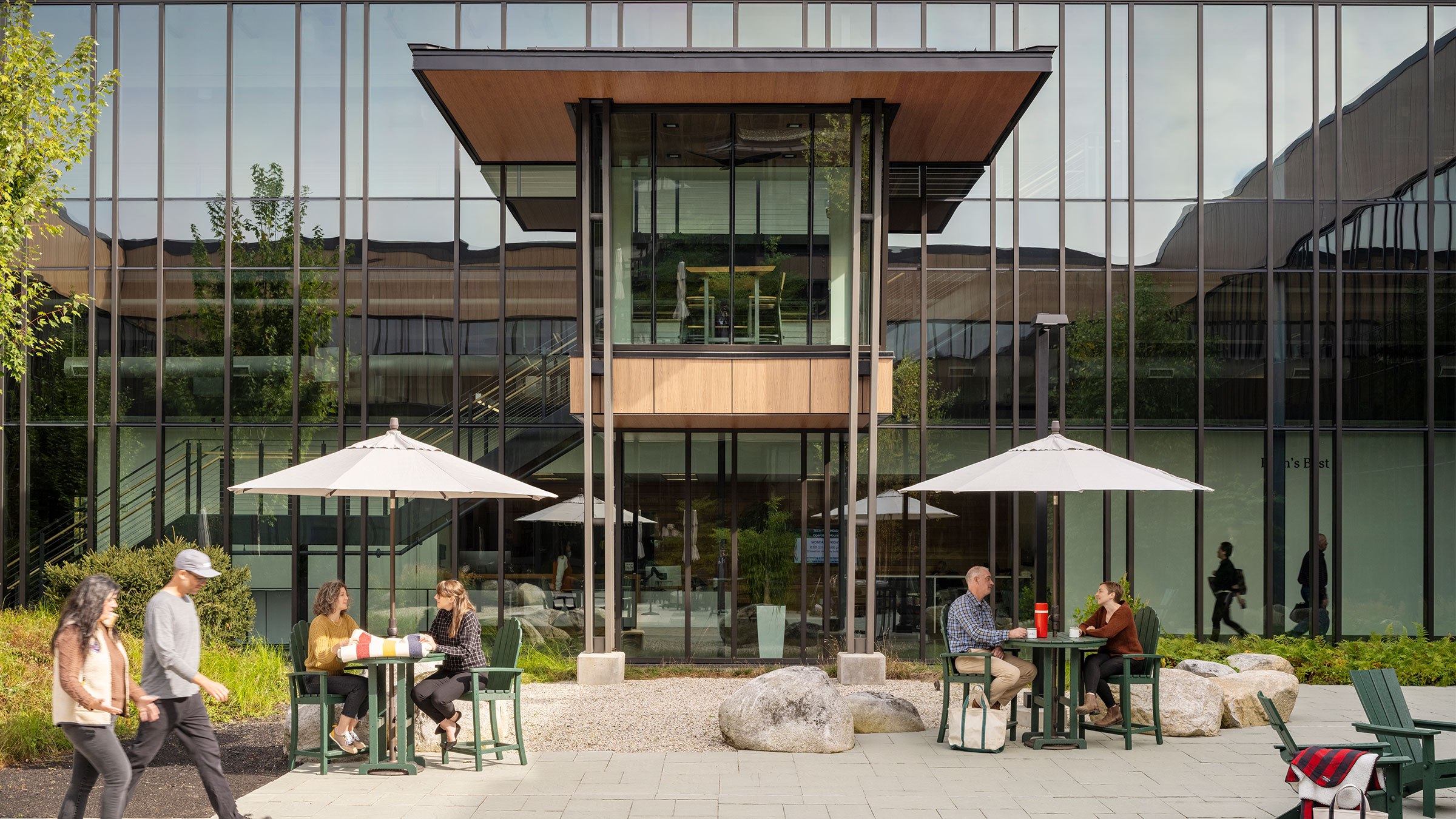
The Wellbeing Dividend: Why Human-Centered Work is the Ultimate Competitive Advantage
I’ve been with SMRT for nearly two decades. In those 19 years, I’ve had a front-row seat to a fundamental shift in how we define the workplace. In the past, offices were a backdrop, a static arrangement of furniture and floor plans, today, work environments are a high-performance tool for productivity, profitability, and people.
Here is the reality I share with our clients every day: the competition for talent is a permanent business reality. Whether you are leading a manufacturing facility or a corporate headquarters, your people are your most significant investment and your most critical resource.
To protect that investment, we must look beyond the metrics of attraction and retention and design for the human experience. When we align our spaces with how people actually function, we create a strategic asset that fuels profitability.
Wellness is a Metric; Wellbeing is a Culture
We often hear wellness used as a buzzword, but I prefer to draw a sharper line between wellness and true wellbeing. Wellness is physical and measurable, it’s what your doctor checks with tests and stats. But wellbeing? That’s holistic. It’s the combination of mental and physical health, and honestly, it’s subjective. One of the best measures we have for it is simply a person’s individual happiness.
When you look at the data, the link between happiness and performance is undeniable:
- Employees who feel their employer cares about their wellbeing are 69% less likely to look for a new job and 3x more likely to be highly engaged.
- Thriving employees are 32% less likely to be job hunting.
- Highly engaged workplaces see a 23% increase in profitability and a 78% reduction in absenteeism.
- Fortune 500 companies that lead in employee wellbeing actually outperform their peers in the S&P 500.
Modern employees, especially Gen Z and Millennials, expect more. In fact, 73% of people say they wouldn’t even apply to a company that doesn’t proactively invest in health and wellbeing.
1. Creating a Community
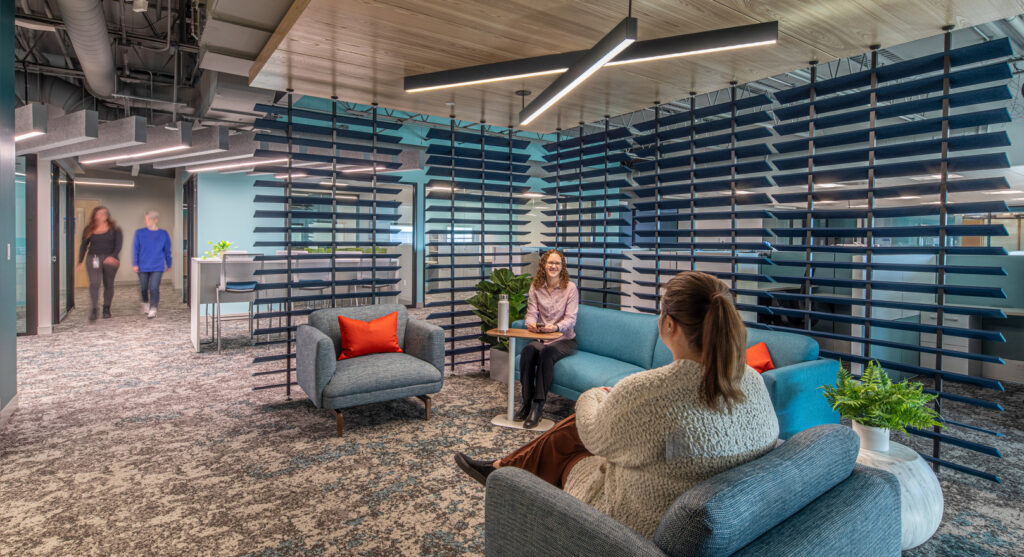
At RayzeBio, they were in a unique and challenging position: building a brand-new team from the ground up while also building their physical space. There was no existing culture to lean on, so architecture had to create the possibility for community. We designed expansive, flexible zones with cafes and lounges that act as cultural enablers. These spaces facilitate spontaneous connection while also serving a dual purpose: they are equally suited for quiet, casual work or intentional, company-wide gatherings like team potlucks and social hours. While design provides the physical framework, it works best when paired with leadership that empowers people to inhabit and use the space as it was intended.
The Impact: When people feel like they belong, they stay. Organizations with a high sense of belonging experience a 50% reduction in turnover risk and a 75% reduction in sick days. By designing for connection, we built a community.
2. The Power of Choice
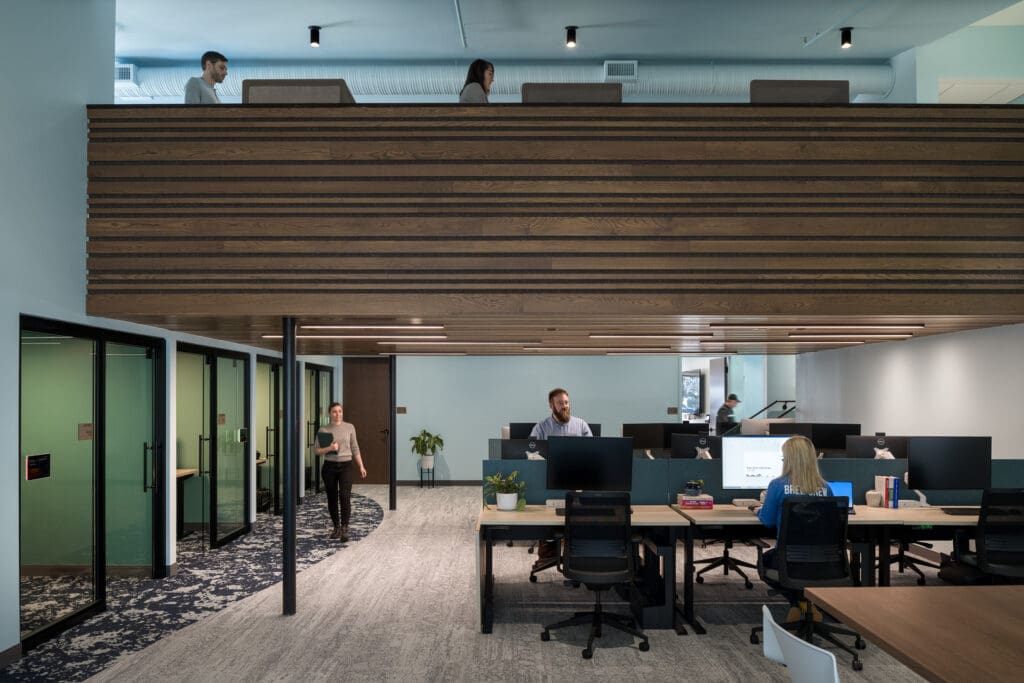
I often say that equity isn’t about providing everyone with the exact same tools; it’s about recognizing that individuals require different environments to thrive. Just as a cyclist needs a bike sized to their frame to perform, an employee needs a workspace that fits their specific task and cognitive style. For the Aroma Joe’s headquarters, we moved away from rigid, standardized workstations and offered a spectrum of spaces. Whether someone needs a library-quiet focus room or a high-energy huddle spot, they have the autonomy to choose.
The Impact: After moving in, our post-occupancy study showed an 84% agreement that staff could find a workspace that actually met their needs. That was a 61% improvement over their previous baseline. When you give people control over how they work, productivity follows.
3. Connect to Nature
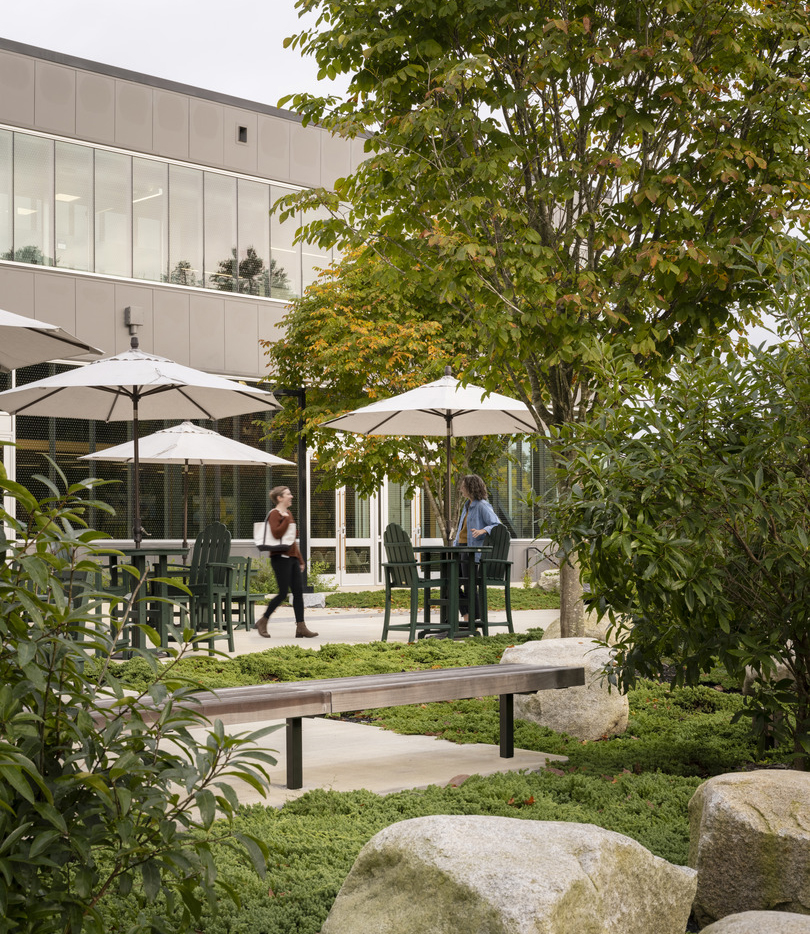
As humans, we are biologically hardwired to respond to nature; it’s called biophilia. For the L.L.Bean headquarters, we maximized natural light, integrated views of the landscape, and used organic materials to blur the lines between indoors and out.
The Impact: Wearable sensor data has shown that offices featuring greenery and natural light can lead to a 200% improvement in employee wellbeing. We’re literally lowering cortisol levels through design.
4. Cultivating Pride in the Mission
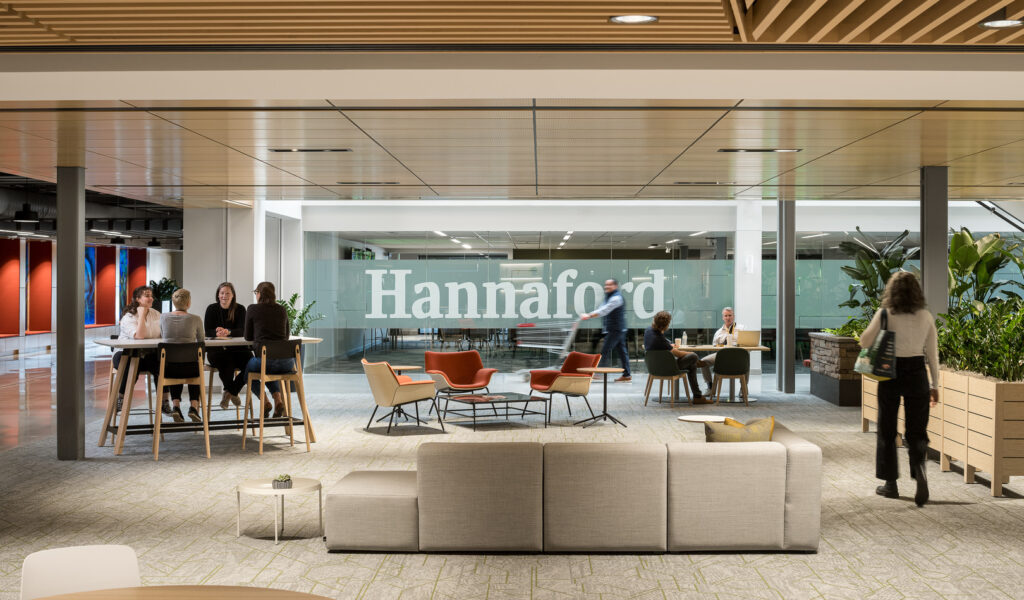
Especially for Gen Z and Millennial talent, work has to mean something. During the Hannaford home office renovation, we used architectural storytelling, using experiential graphics and mission-driven design to remind everyone why they do what they do. We turned a maze of corridors into a streamlined brand experience.
The Impact: When employees feel a deep connection to their company culture, they are 62% less likely to feel burned out. A space that reflects your mission promotes a sense of purpose that a paycheck alone just can’t buy.
The Bottom Line
Happy, healthy people do better work, it’s that simple. While the physical space is a vital tool, it is the culture of wellbeing that truly drives impact. Are you ready to build a future of work that is as high-performing as it is human-centered?